April 28, 2026 | Blog
Red Fox Kits: Keeping Wildlife Wild
Written by Jillian VanKooten
Every spring, WILDNorth prepares for one of its busiest and most heartwarming seasons: the arrival of baby wildlife! One of the cutest baby animals we admit are Red Fox kits. These young animals, often discovered alone, injured, or seemingly orphaned, are a commonly admitted patient in the spring and summer time at WILDNorth. But despite their undeniable charm and cuteness factor, the most important message we can share is simple, ask before you act.
When “Alone” Doesn’t Mean Orphaned
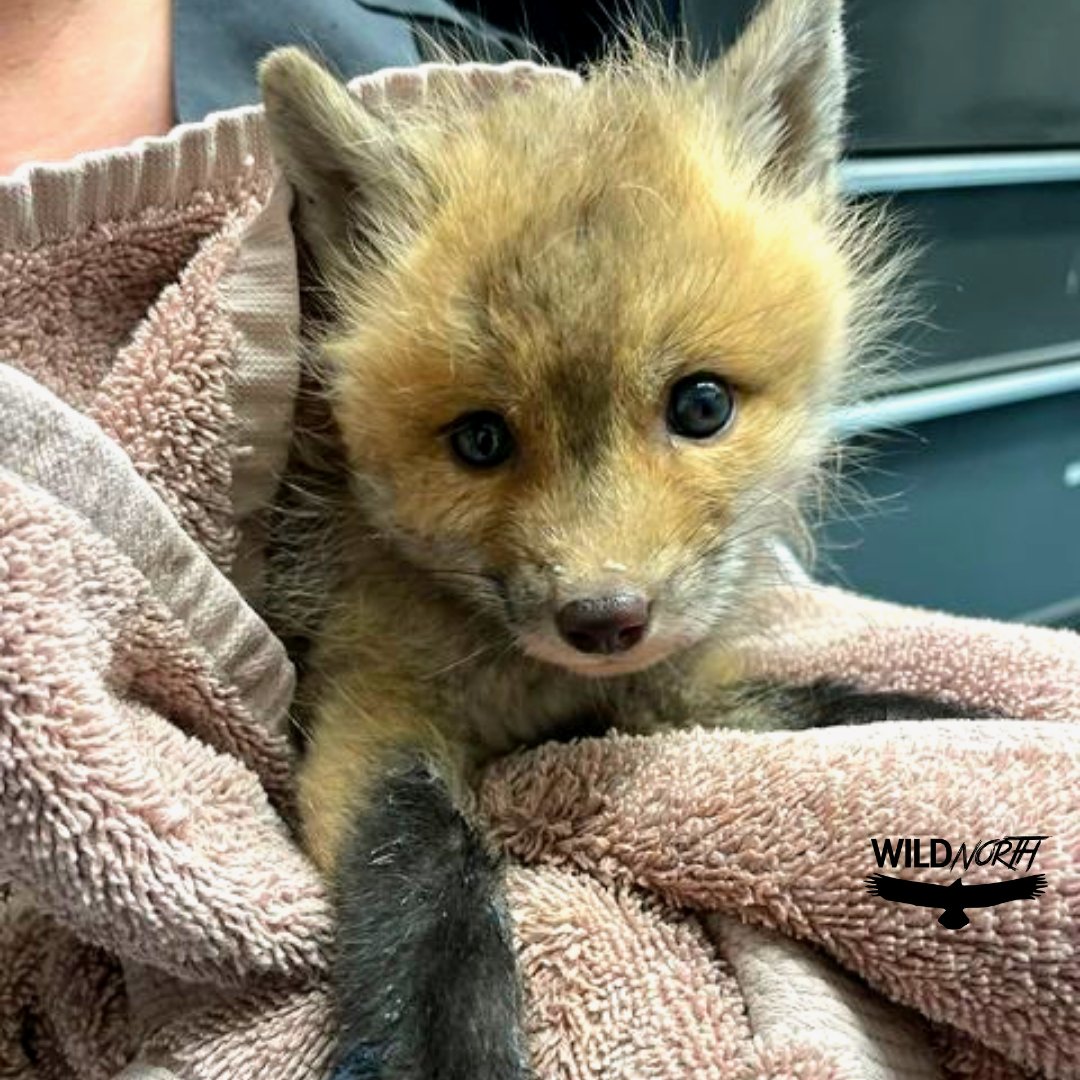
It’s natural to feel concerned when you spot a tiny fox kit by itself. However, appearances can be deceiving. In reality, most Red Fox kits found alone are not orphaned and do not need human intervention. Removing them from the wild unnecessarily can do more harm than good. Red Fox kits actually develop quite quickly. They begin venturing outside the den at just three weeks old and are weaned at around one month. During this time, it’s completely normal to see them exploring or resting without a parent in sight. By about three months of age, they’re often spending extended time outside of their den with their family. Behind the scenes, Red Fox parents are hard at work. Both mother and father play active roles in raising their young, bringing food, guarding the den, and even playing with the kits to help them develop essential survival skills. Fox fathers, in particular, are dedicated providers, hunting daily and engaging in playful “roughhousing” as the kits grow.
What To Do If You Find a Fox Kit
If you encounter a fox kit on its own, the best first step is to pause and assess the situation. Is the animal visibly injured or unwell? Is it in immediate danger? If not, it’s likely best left where it is. Before taking any action, contact WILDNorth’s Wildlife Helpline at 780-914-4118. Their trained staff can guide you on whether intervention is necessary and what steps to take next.
A Second Chance Through Rehabilitation
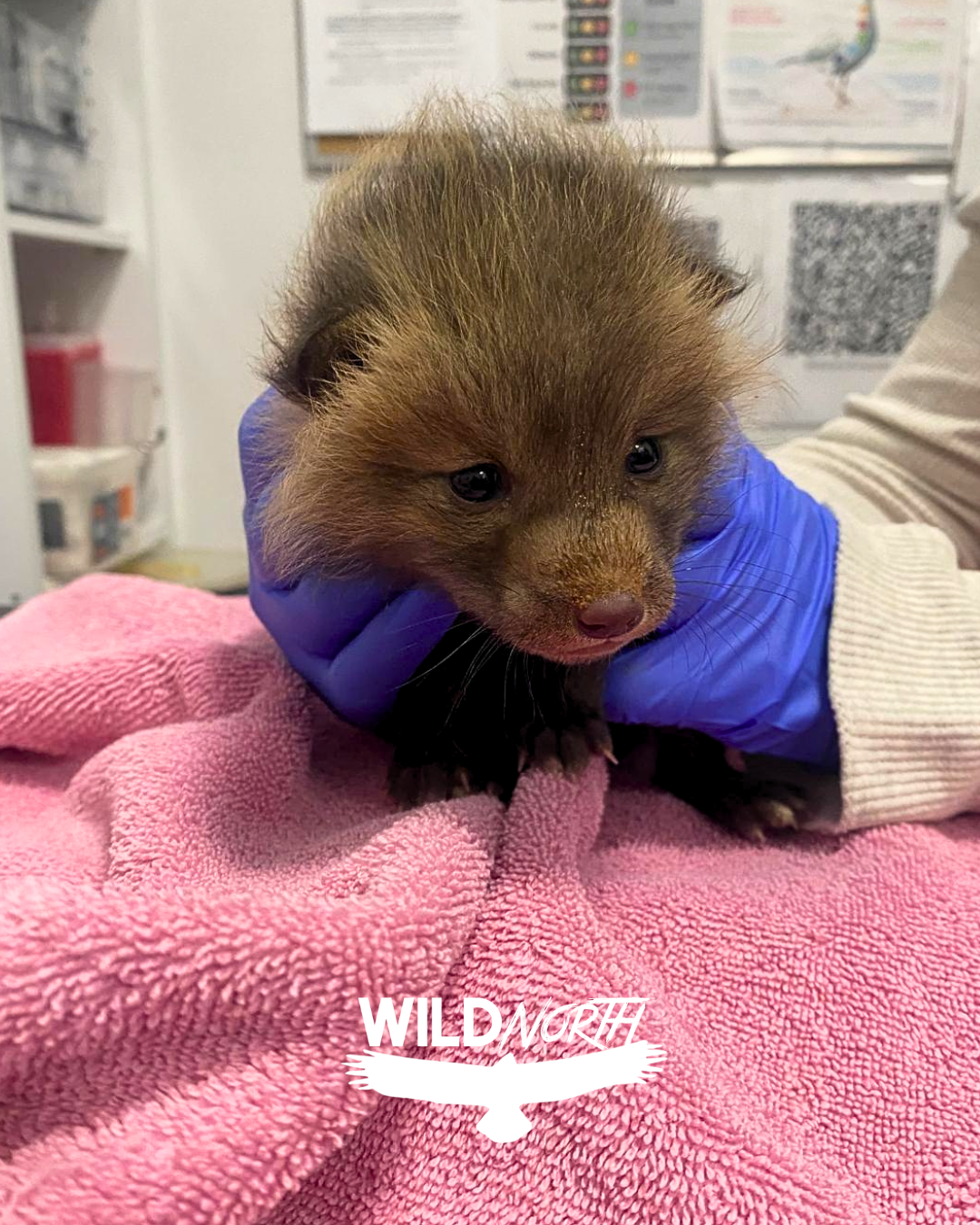
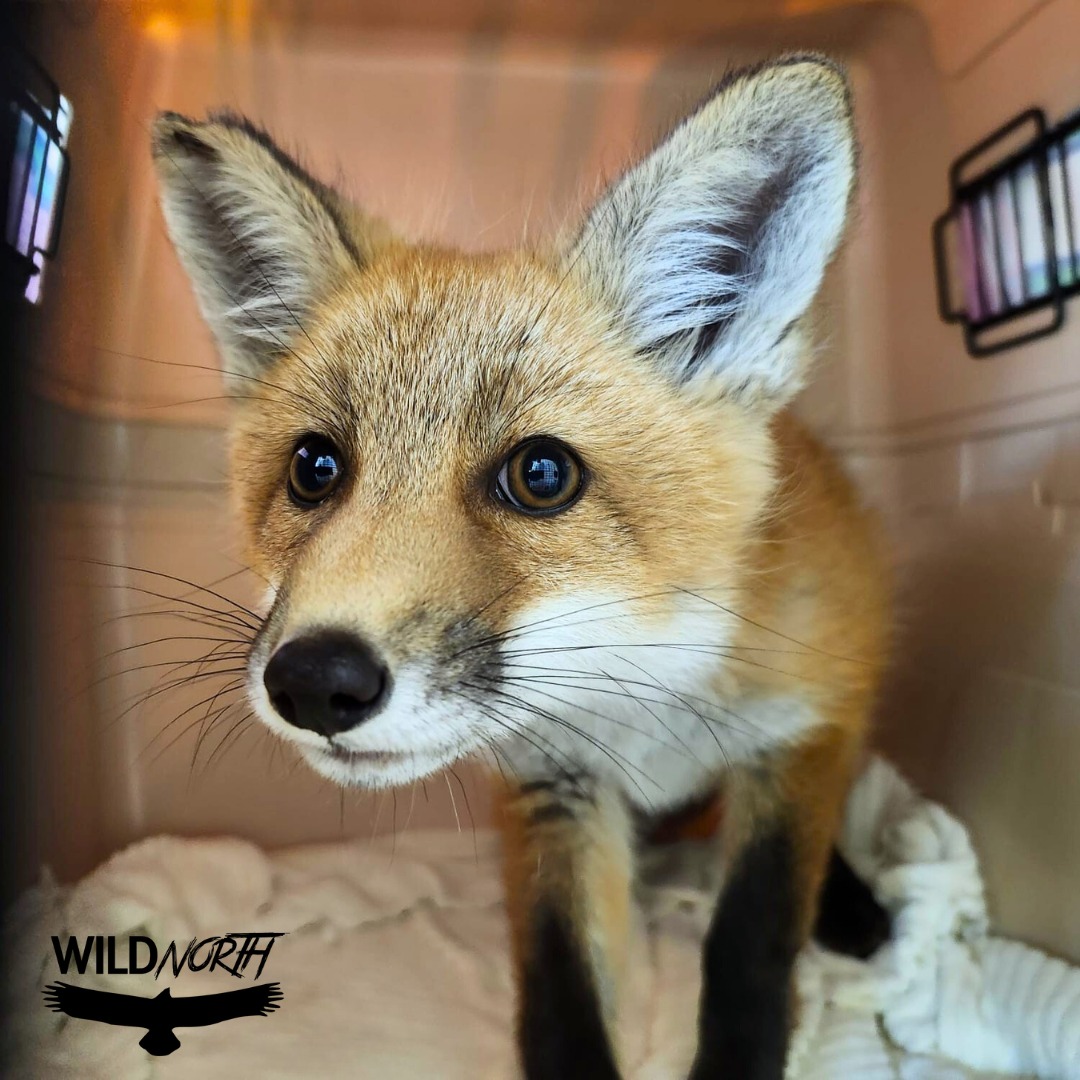
This spring, WILDNorth has already admitted several truly orphaned Red Fox kits from across Northern Alberta. For these animals, the goal is always to return them to the wild in the most natural way possible. Whenever feasible, young kits are fostered into existing wild dens with fox families raising kits of a similar age. This gives them the invaluable opportunity to grow up with their own kind, learning natural behaviors directly from wild parents. In past years, we have had a very high success rate reintroducing many of the Red Fox kits admitted into our care back into a fox den in the wild.
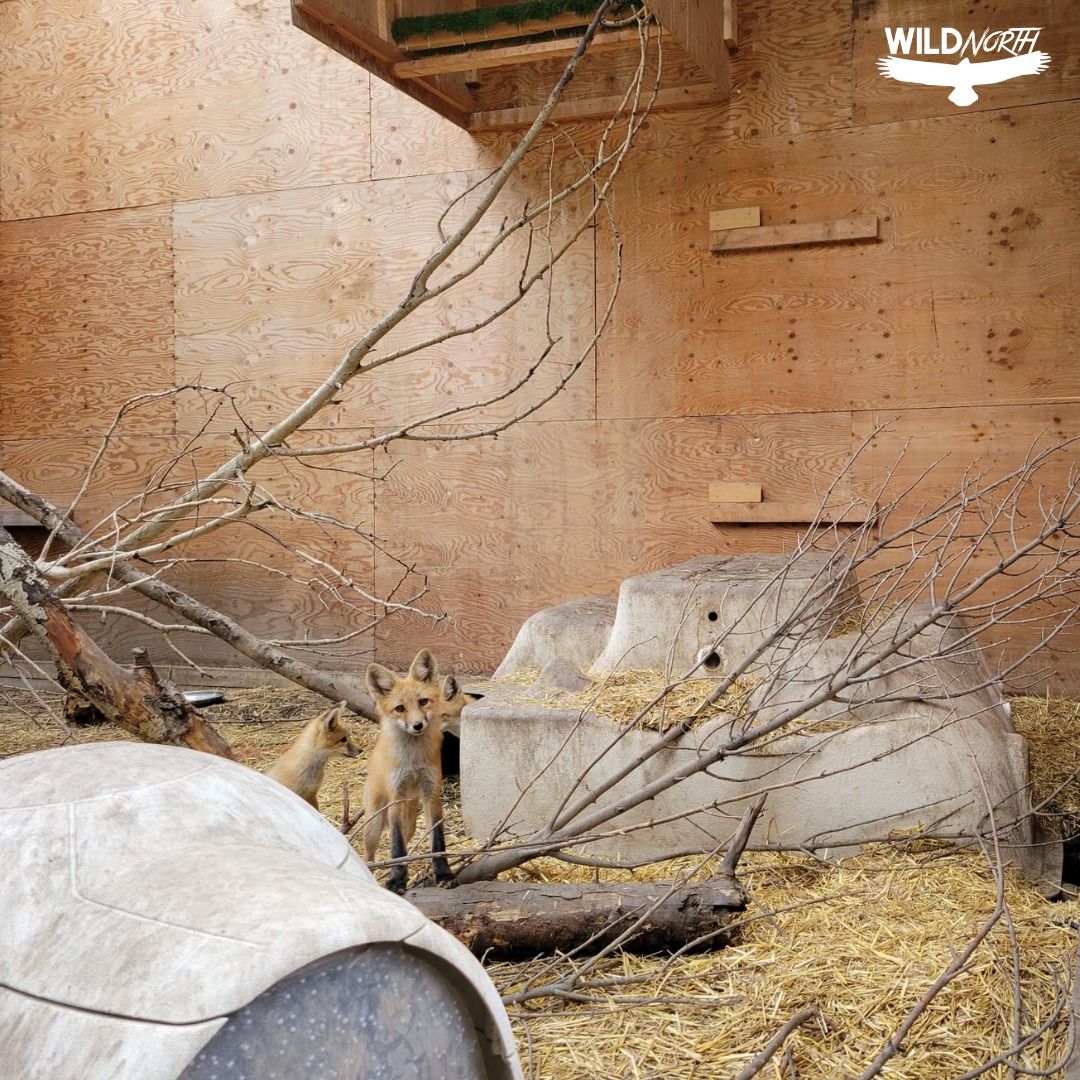
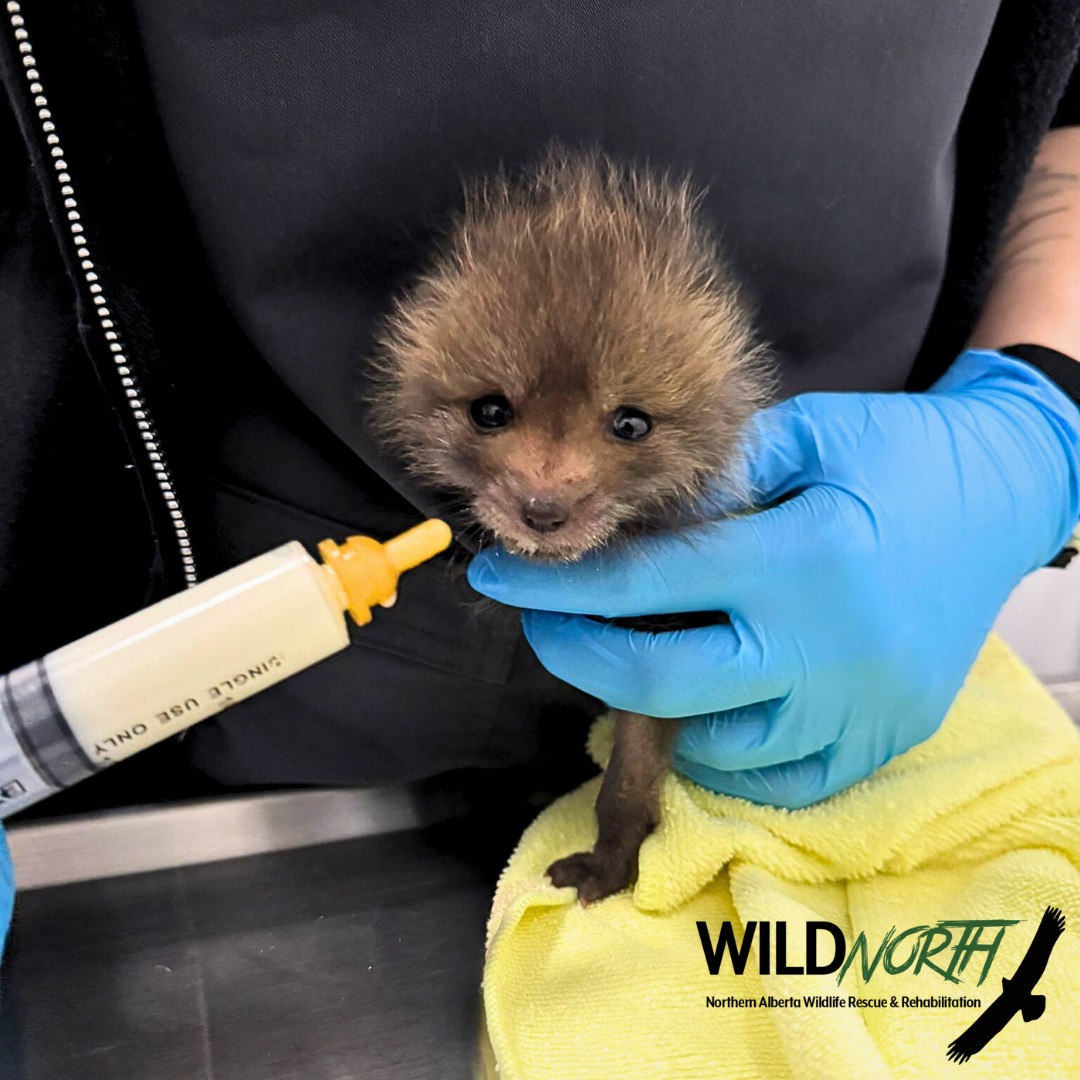
However, not all kits can be fostered due to a limited number of available dens, and, in those cases, our team steps in with specialized care. Red Fox kits are carefully rehabilitated to avoid human imprinting, beginning with syringe feeding appropriate milk replacer before gradually transitioning to solid food. As they mature, they are moved to a large outdoor enclosure at the Parkland County Rehabilitation site to allow for species specific behaviors to develop. There, they are given the space and conditions to rediscover their wild instincts, learning to hunt live prey, dig dens, and interact naturally with one another. Meanwhile, staff work diligently to locate suitable release sites. In one successful case last year, an accessible, unused den was identified in an area with known Red Fox activity. Once the kits were ready, they were humanely transferred and released into this environment, giving them a true second chance at life in the wild.
Keeping Wildlife Wild
At the heart of WILDNorth’s work is a simple philosophy: wildlife belongs in the wild. While it can be tempting to step in and help, the best thing we can often do is allow nature, and dedicated wildlife professionals like ourselves, to take the lead. So the next time you spot a Red Fox kit, remember: observe from a distance, resist the urge to intervene, and when in doubt, reach out. Your actions can make all the difference in ensuring these incredible animals grow up where they belong.