April 14, 2026 | Blog
Striped Skunks: Understanding, Preventing Conflict, and Coexisting Humanely
Written by Jillian VanKooten
Striped Skunks are some of the most recognizable mammals in North America, famous for their bold black-and-white markings and, of course, their powerful defensive spray. While they’ve earned a “stinky” reputation, there’s much more to these animals than meets the nose. By understanding their behavior and needs, we can better coexist with them and reduce unnecessary harm.
Meet the Striped Skunk
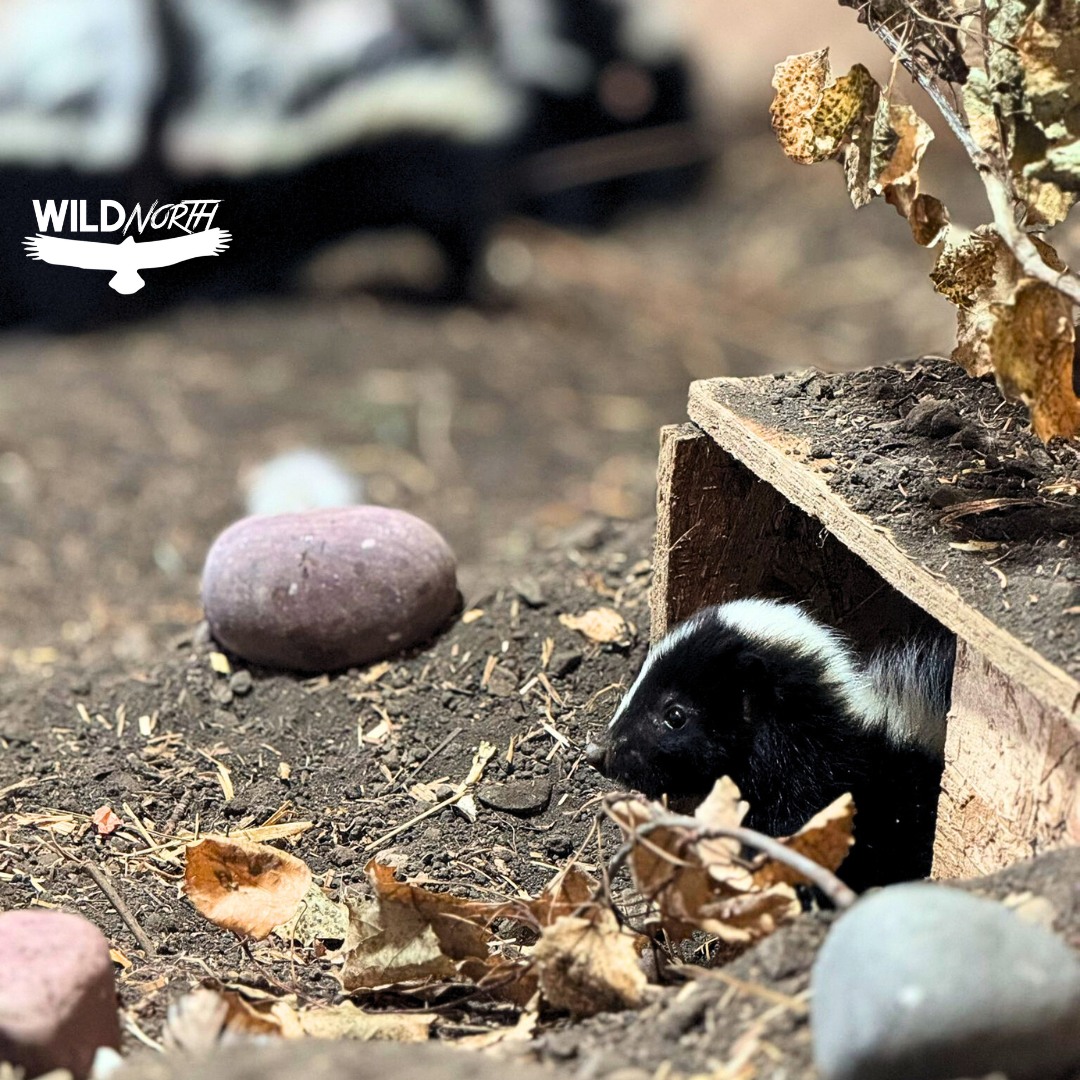
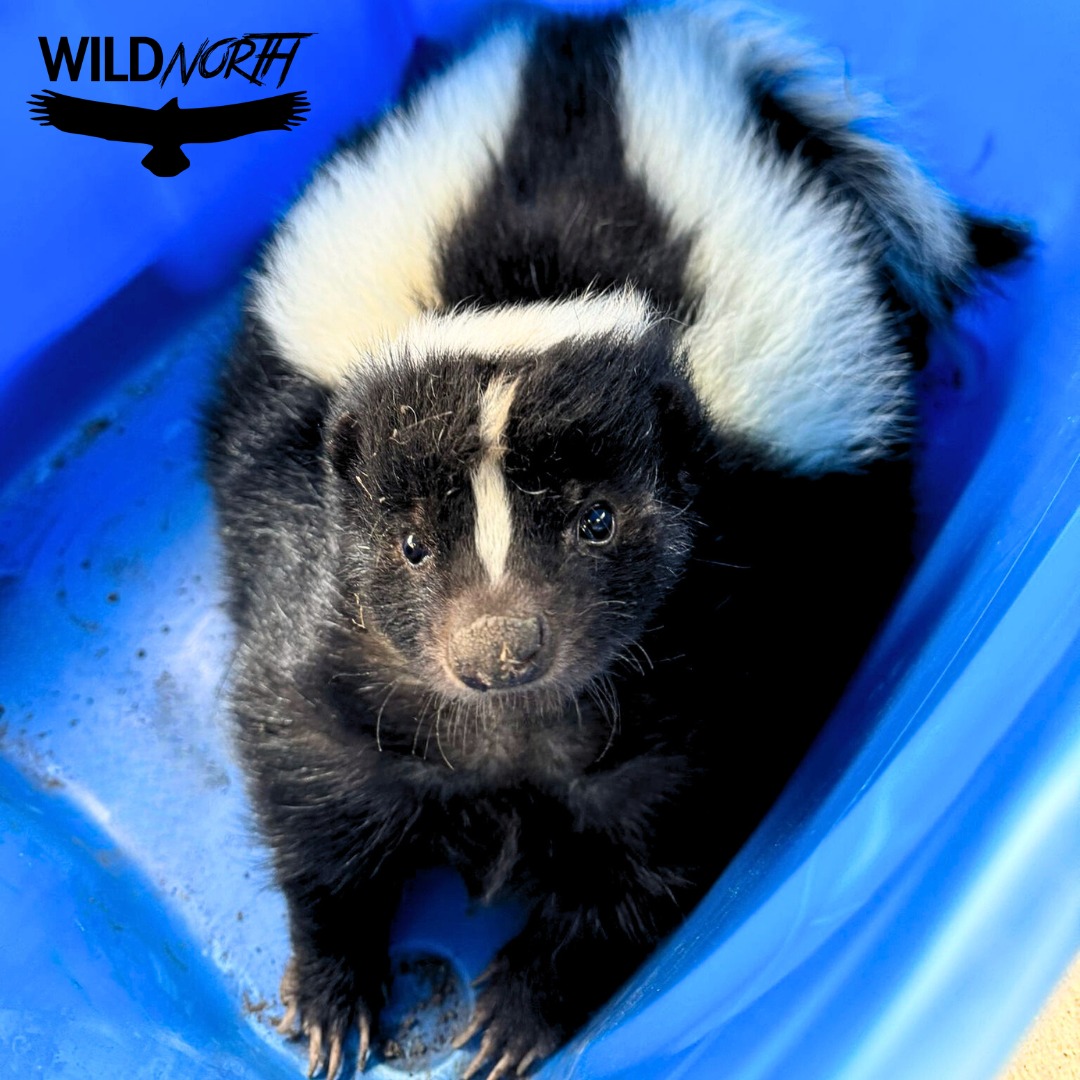
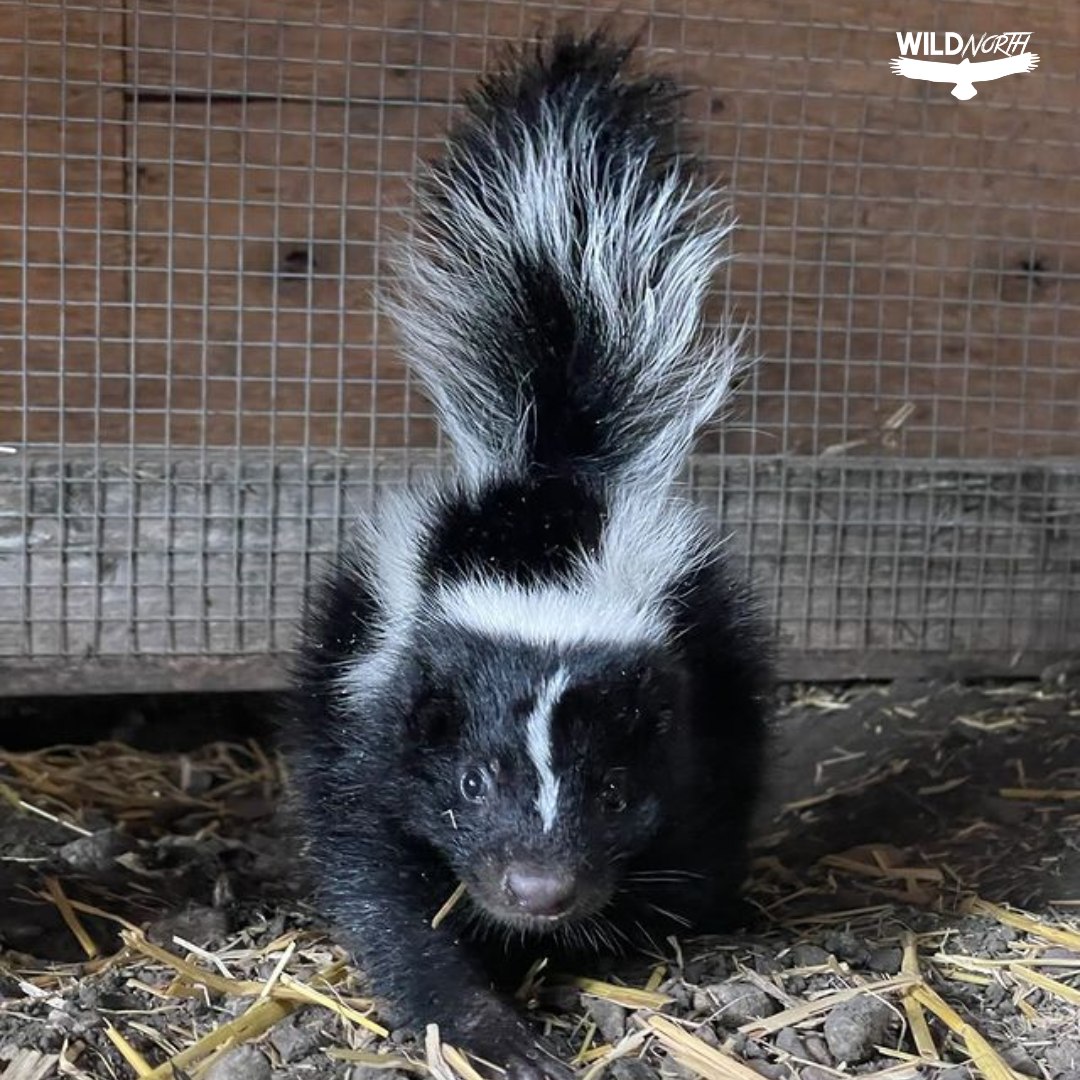
Striped Skunks are nocturnal mammals, meaning they rest during the day and are most active at night. Despite their intimidating defense mechanism, they are not aggressive animals and prefer to avoid conflict whenever possible. Their well-known spray is produced by two glands located near the base of their tail. This strong-smelling fluid is used strictly as a last line of defense against predators. Before spraying, skunks will attempt to run away or hide, if this is not an option, they usually give clear warning signs: raising their tail, stomping their feet, and making hissing or growling sounds and finally turning around and doing a handstand immediately before spraying. If you notice these behaviors, the best response is to calmly and slowly back away. As omnivores, skunks have a varied diet that includes insects, small mammals like mice, shrews, and ground squirrels, bird eggs, fruits and plant material. This means they consume many of those nuisance species like wasps, mice and dandelions, improving your backyard ecosytem! This adaptability is one reason they thrive in both rural and urban environments.
Skunks in Urban Spaces: Why You Should Never Trap and Relocate Skunks
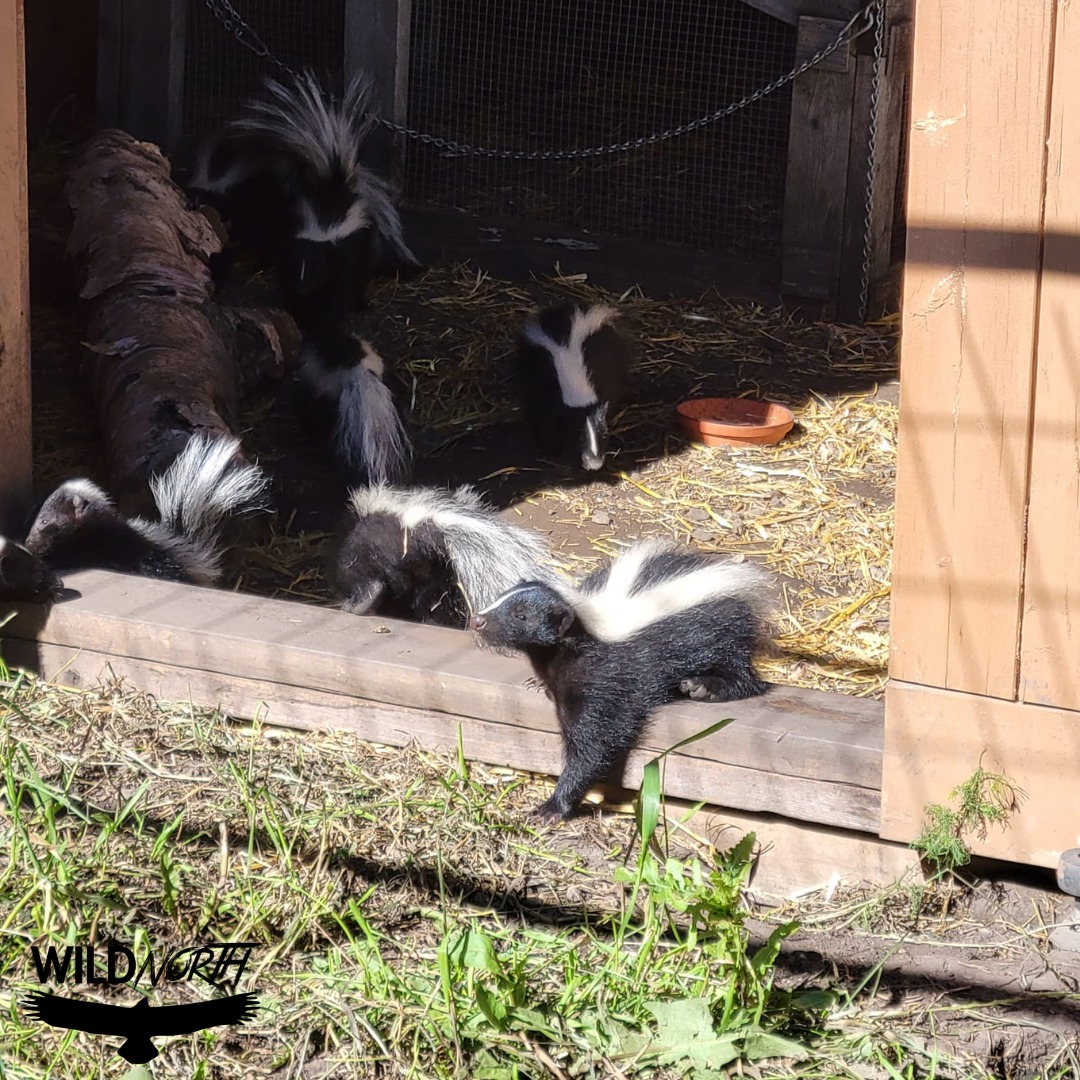
It’s not uncommon for skunks to take up residence under decks, porches, or sheds. These sheltered areas provide ideal denning sites, especially during breeding season. Skunks typically mate in late February to early March, with litters of 5–6 kits born around mid-May. At about five weeks old, young skunks begin venturing outside during the day, an adorable sight! While this might seem unusual for a nocturnal species, it’s completely normal, these kits are simply playing while their mother rests nearby. Since adult skunks are so elusive, many people don’t even realize they have a skunk family living nearby until they start seeing the babies.
When skunks settle in front or backyards, some people attempt to trap and relocate them. While this may seem like a quick fix, it causes more harm than good.
Relocation:
- Orphans young animals if the mother is removed
- Reduces survival rates due to unfamiliar territory and lack of resources
- Doesn’t solve the problem long-term, as another animal will likely move into the vacant space
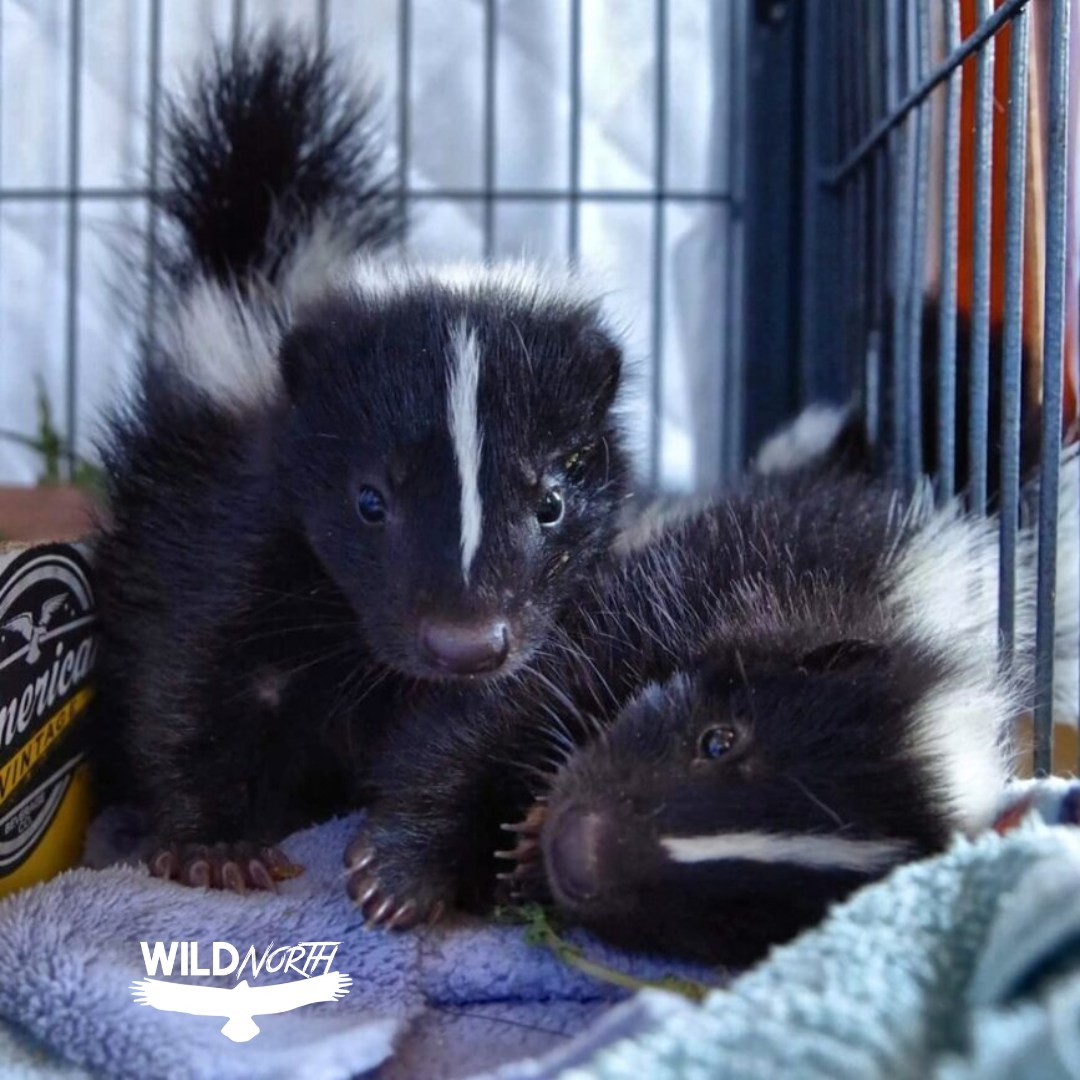
In fact, wildlife rehabilitation centres, like ourselves, often see a surge of orphaned skunk kits in late spring and early summer, the majority of them the result of relocation attempts.
Humane Solutions: What to Do Instead
The most effective and compassionate approach is to encourage skunks to move on naturally using humane deterrents. Here’s how:
1. Remove Attractants
Wildlife are drawn to areas that provide food, water, and shelter. Start by identifying what might be attracting skunks to your property:
- Pet food left outdoors
- Unsecured recycling, garbage or compost
- Spilled bird seed
- Easy access to spaces under decks or structures
Eliminating these attractants is the most important first step.
2. Add Deterrents
Once attractants are removed, make the area less appealing:
- Scent deterrents: Products like synthetic predator urine can signal danger (this can be purchased at Cabella’s or Canadian Tire)
- Sound deterrents: Playing talk radio or a podcast at a low volume near den sites can mimic human presence
- Light deterrents: Motion-activated or continuous lighting can discourage skunks from staying
We recommend implementing all 3 of these methods, along with removing attractants, for at least 3 days straight for the most effect. These methods work by making the environment feel unsafe or uncomfortable for wildlife and encourage them to move on on their own.
3. Exclude (After They Leave)
After confirming that the skunks have moved on, this can be done by putting crumpled paper in the entrance to their den to see if they are coming or going, you can take steps to prevent future visitors:
- Seal off openings under decks and sheds
- Install barriers or mesh around vulnerable areas
It’s important to only do this after the animals have left to avoid trapping them inside.
Coexisting with Wildlife
While sharing space with wildlife can be challenging, it’s often the most sustainable and humane option. Skunks play an important role in the ecosystem by controlling insect and rodent populations. By understanding their behavior and taking preventative steps, we can reduce conflict and support the wellbeing of both people and wildlife.
Need Help?
If you’re dealing with a skunk on your property and aren’t sure what to do, reaching out for guidance is always the best first step. Wildlife professionals can help you assess the situation and recommend humane, effective solutions. Access our informational web page here or call our Wildlife Helpline at 780-914-4118.
Striped Skunks may have a strong smell, but they’re also intelligent, adaptable, and surprisingly gentle creatures. With a little knowledge and patience, peaceful coexistence is entirely possible🦨