April 07, 2026 | Blog
The Hard Truth About Baby Hares: A Wildlife Volunteer’s Story
Written by Belinda Cornish, WILDNorth Volunteer
In my first year nannying baby hares, everyone told me how difficult they are to raise, and how the survival rates are very low. I prepared myself for heartbreak, and dived in. I gave them a nice enclosure, fed them appropriate food, kept them clean and safe, and 90% of my babies grew up big and strong and hopped happily back into the wild on release day. Well, I thought, that was pretty simple. Why does everyone say that raising baby hares is hard?
The next year, I learned why. I did everything exactly the same as I had that first summer. Nothing changed. Except for the survival rate. 85% of the babies died. No matter what we tried,
they became ill, declined, and passed away. There was no outbreak of disease or infection, no obvious reason for it. They just died. Sometimes in my hands as I sat in their enclosure at 5am, desperately trying to give emergency support to a little body that just wanted to give up. It was devastating, exhausting, and baffling, and it taught me two big lessons. First, that
everyone was right, and that hares are incredibly difficult to raise. And second, that I wanted to learn everything I could about them, so that in those really hard years, when the babies are
especially frail (which they sometimes are) or when a leveret is very debilitated at intake, we can support them better. Many summers on, I have mostly learned that I have so much more to learn! Hares are incredible animals. They have simple instincts and complex needs. They are amazingly resilient but also terribly fragile. They are bold and tenacious, and also shy and scared. Every baby I care for is different, and teaches me something new.
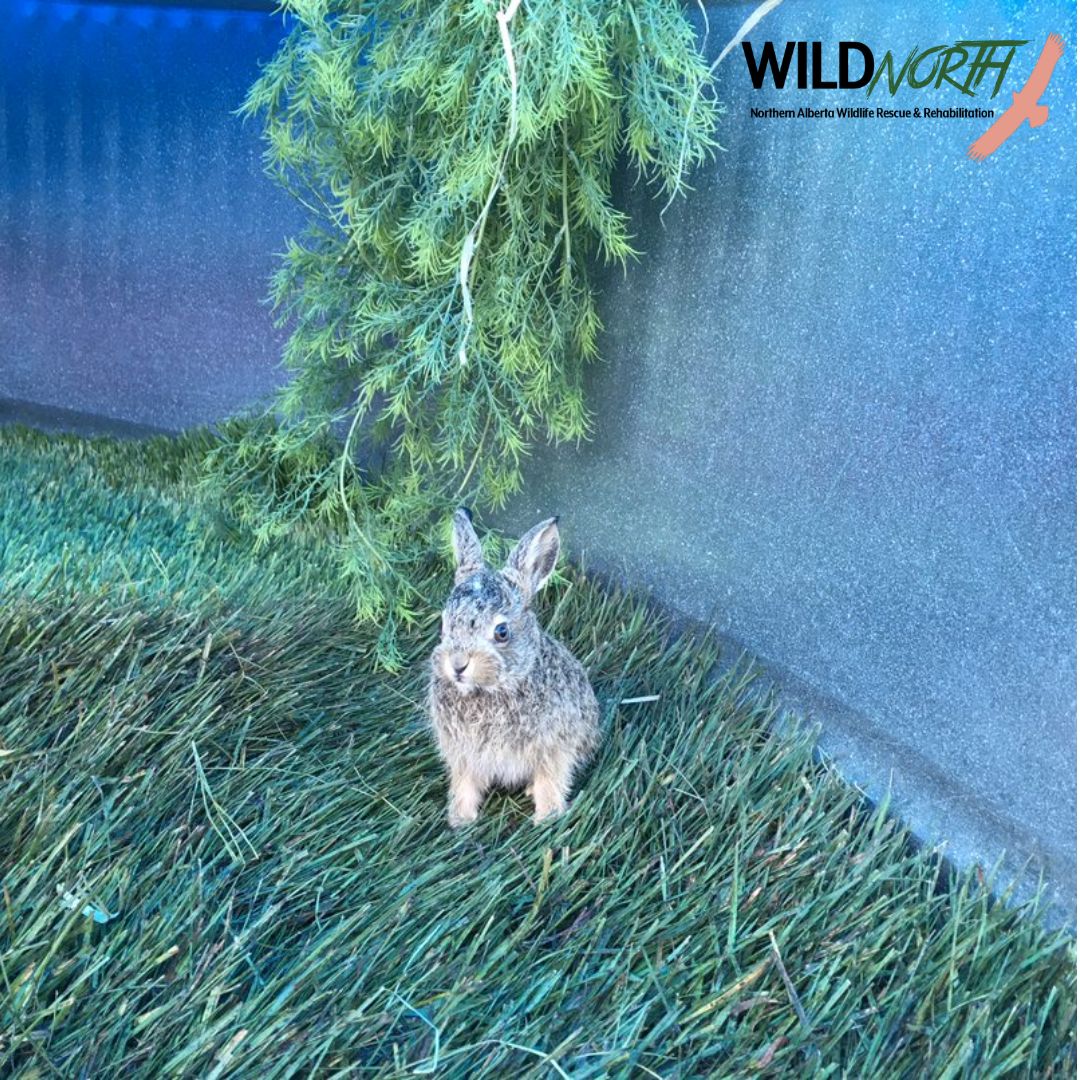
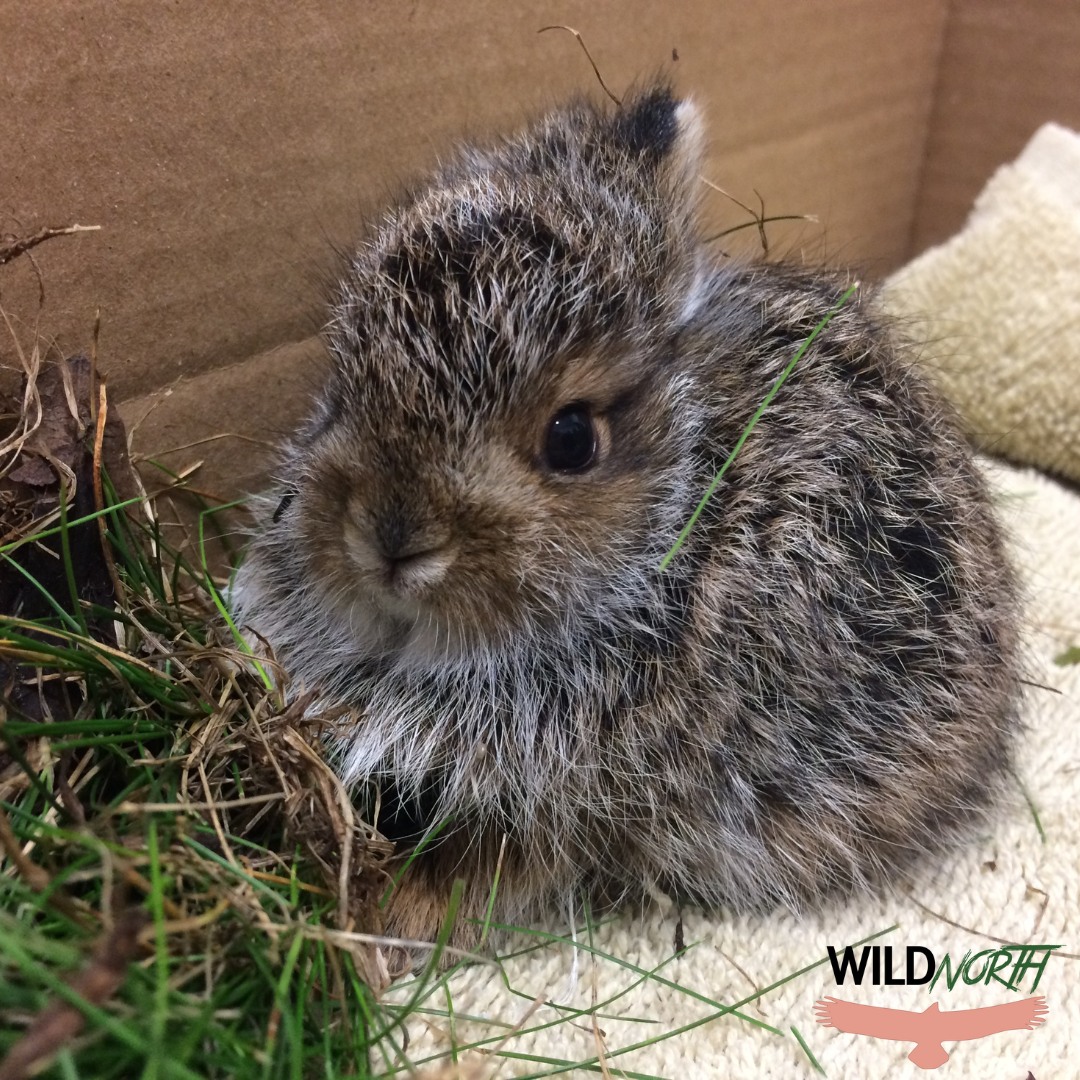
“If you see a baby hare, leave it right there!” — Most people know this rule but it’s amazing how many people find it difficult to follow when they see a tiny ball of fluff sitting out there all alone in the big scary world. So often, people will say “I know you’re supposed to leave baby hares be, but this one looked like it needed rescuing, so I took it home.” WILDNorth once got a call from a very kind man and his friends who were watching a mother hare give birth on a golf course. He said they had got a box ready to collect all the babies – where did we want him to bring them? Noooo, we cried, please leave them where they are! People are so kind and well-meaning, and I empathize with them completely! Baby hares are so sweet and vulnerable, all we want to do is scoop them up and protect them from a dangerous world full of crows and coyotes and cars and cats. We humans often think we can give them a better chance at life, tucked up safely under our care. But, despite the risks they face, they are always better off and happier in the wild, being cared for by their mothers.
Our safe, cozy homes are lovely places to be, right? Unfortunately, hares don’t agree. To a hare, being inside is completely unnatural and often very frightening. Every time a hare is picked up by a human, they don’t know that we want to love and care for them – they just see a predator who’s going to eat them. They often tend to react to that fear by freezing stock still, and people often say “it seemed so calm and happy in my hands, it didn’t try to run away” but this is actually a scared hare’s defense mechanism. Hares in the wild are well camouflaged, and can become almost invisible to predators by remaining completely still, like little furry rocks.
Hares are also very difficult to feed, and the wrong things can kill them very quickly. Cow’s milk, for example, is usually fatal to a baby hare. WILDNorth has access to the most species appropriate milk replacement formula, but even that is not as good as their mothers’ milk. Did you know that a hare doe’s milk is completely unique? And contains certain ingredients that are almost impossible to replicate? And changes according to habitat and the age of the baby? So we do our best, but Mum is always better.
If you see a baby sitting somewhere really dangerous or inappropriate, you can carefully move it somewhere safer, such as under the nearest bush. The mother will not reject it if it has been
touched by a human, but we do leave our scent on their fur. Baby hares have no natural scent at all, to protect them from predators, so it’s advisable to use a clean cloth, gloves, or even some big
leaves, when picking a baby up. Sometimes a baby does actually need to be rescued. If it’s clearly orphaned (such as seen sitting near a dead adult) or has been stuck somewhere for a while and there has obviously been no mother coming to feed it. Or, of course, if it’s injured. In these situations, please please please call WILDNorth. Don’t take it home and try to raise it yourself. Everyone has a story about their Auntie Susan or their friend Mike who successfully raised a baby hare – and truly, I congratulate those folks. They did really well. But those stories are much less common than those of people who tried and did not succeed. It is a heartbreaking lesson to learn, and not a nice experience for the baby hare who teaches that lesson.
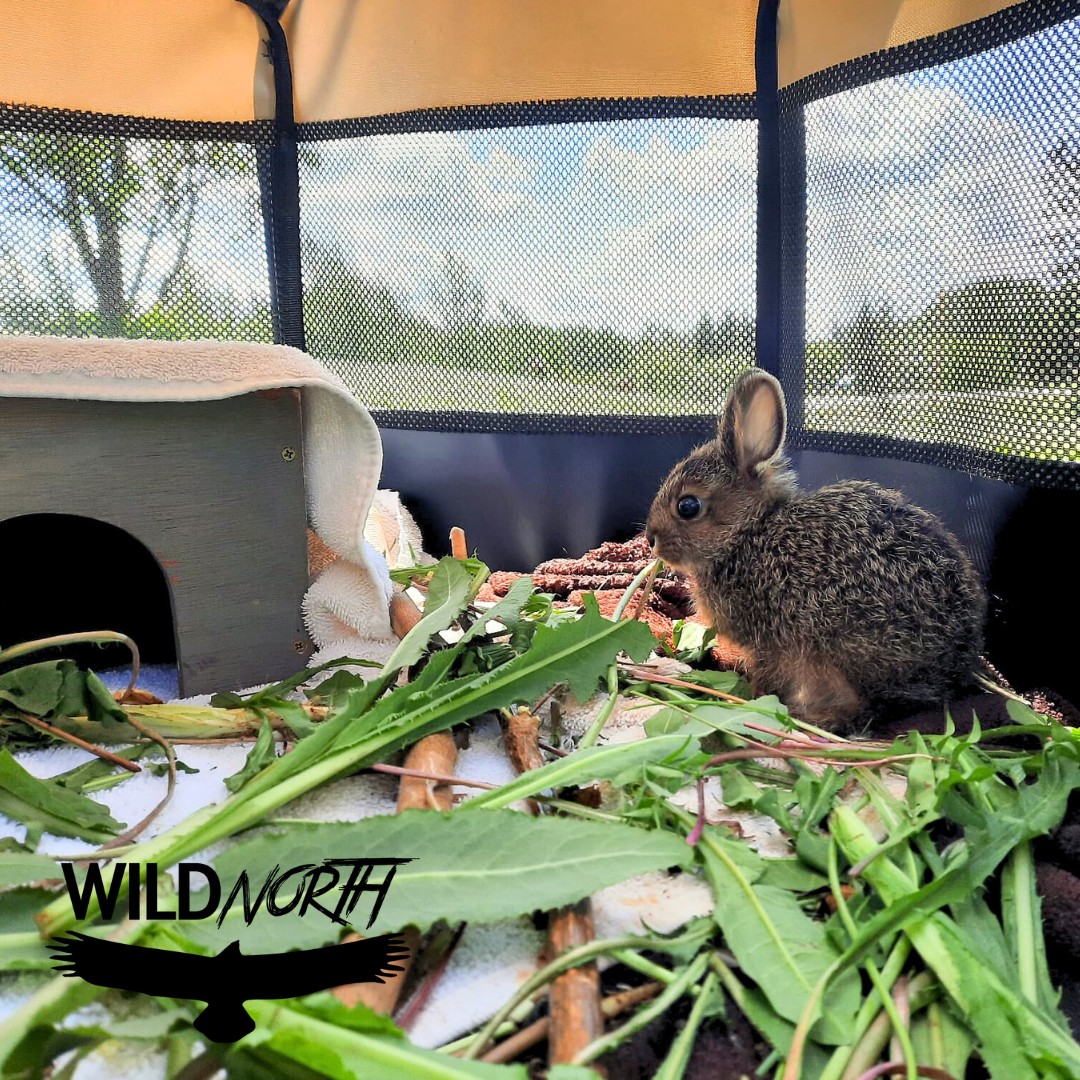
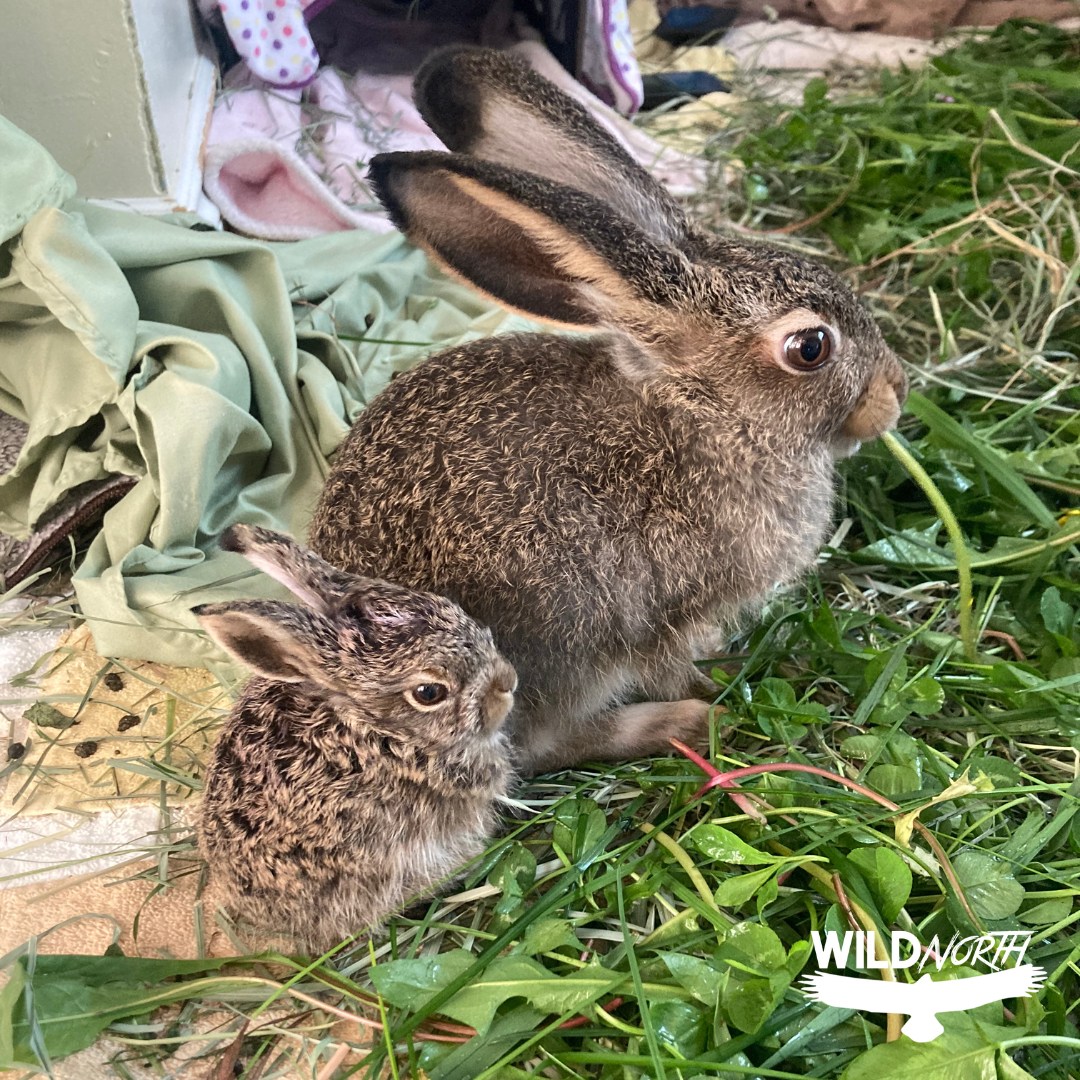
Hares are remarkable animals, and I love them with all my heart. In Edmonton, we deal with two species: the white-tailed prairie hares – or jackrabbits – that Edmonton residents see hopping
around their neighborhoods, and; snowshoe hares, which tend to stick to more forested, rural areas. Jackrabbits are usually tidy little things – they mosey around their enclosure, eating their
dandelions, nestling in their dens. Snowshoes are tiny chaos monsters who like to trash the place. I have seen a baby snowshoe hare pick up a cardboard box 3 times her size and hurl it across the
room.
I feel incredibly privileged to work with these animals; it takes a lot of work, focus, and dedicated care, but it’s worth it every time I get to watch a tiny 80 gram baby grow into a great big lanky teenager and lope off into the wild. They are a magical, invaluable part of our world, and you can be a part of making sure they have the best chance by following these rules!
If you see a baby hare, leave it right there! If you think it needs help, call before you act! WILDNorth staff and volunteers are always happy to offer advice about a situation. Trust us if we tell you to put the baby back! If it’s been injured, take it to WILDNorth! If it’s been confirmed orphaned, take it to WILDNorth! The hares of Alberta say thank you!