
March 18, 2026 | Blog
Window Strikes: What Happens Next and How to Help Prevent Them
By Jillian VanKooten
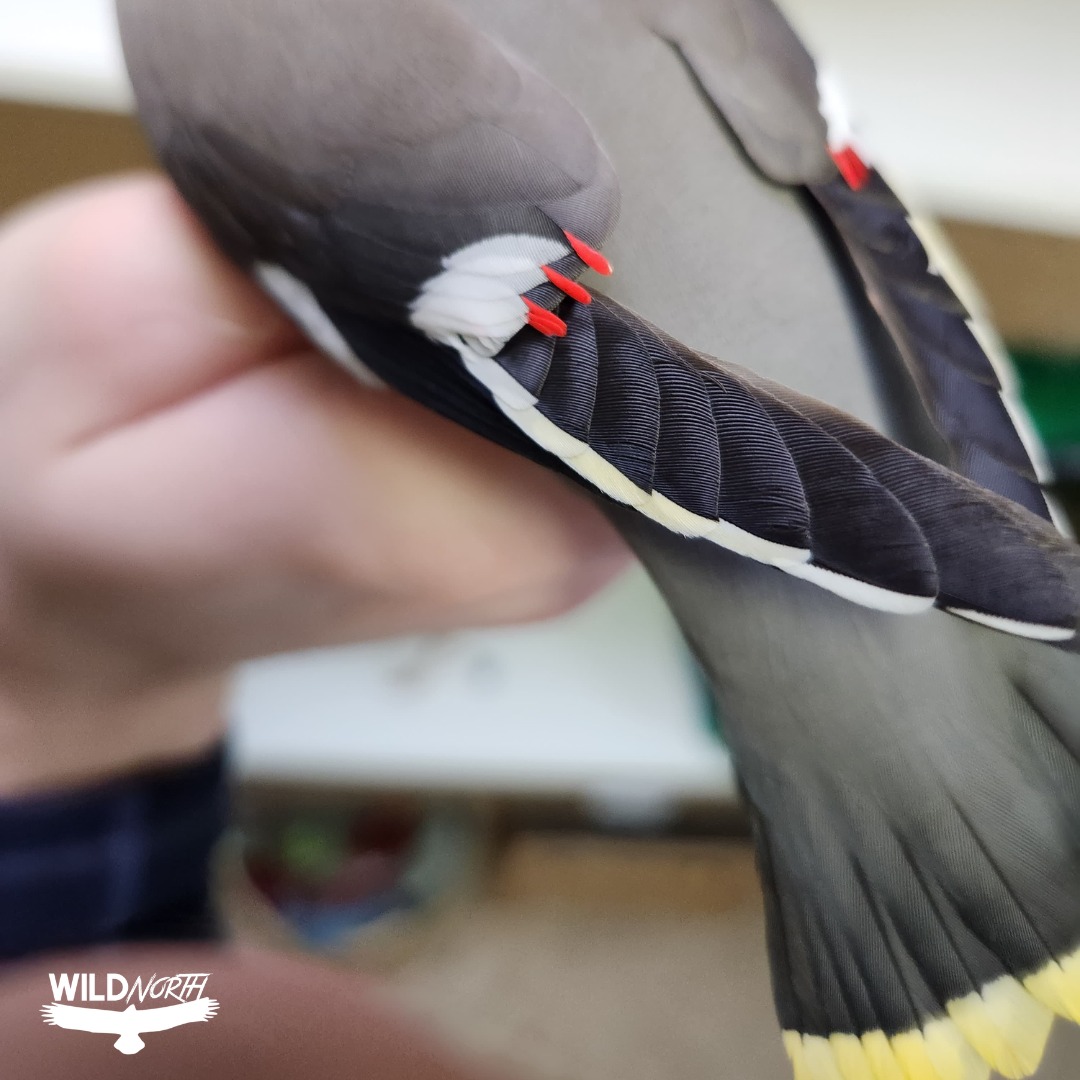
Consistent with the spring migratory period, we see a significant increase in patients admitted after window strikes. These incidents are one of the most common causes of injury in wild birds, and one of the most preventable. In fact, collisions with windows are estimated to cause between 16 and 42 million bird deaths each year in Canada alone.
Oh No, Not Another Window Strike

Imagine you’re at home, sitting on the couch, when you hear a sudden thump against your window. You rush outside and find a bird on the ground beneath your front window, and it’s not looking well.
You think, “Oh no, not another window strike.” You call WILDNorth’s Wildlife Helpline at 780-914-4118 and follow their recommendation: take a towel or blanket, gently toss it over top of the animal, use that to place the bird in a box and bring it to the wildlife hospital as soon as possible.
You carefully contain the bird, bring it to the hospital, hand over the box, fill out an intake form, and head home, hoping for the best.
But, what happens next?
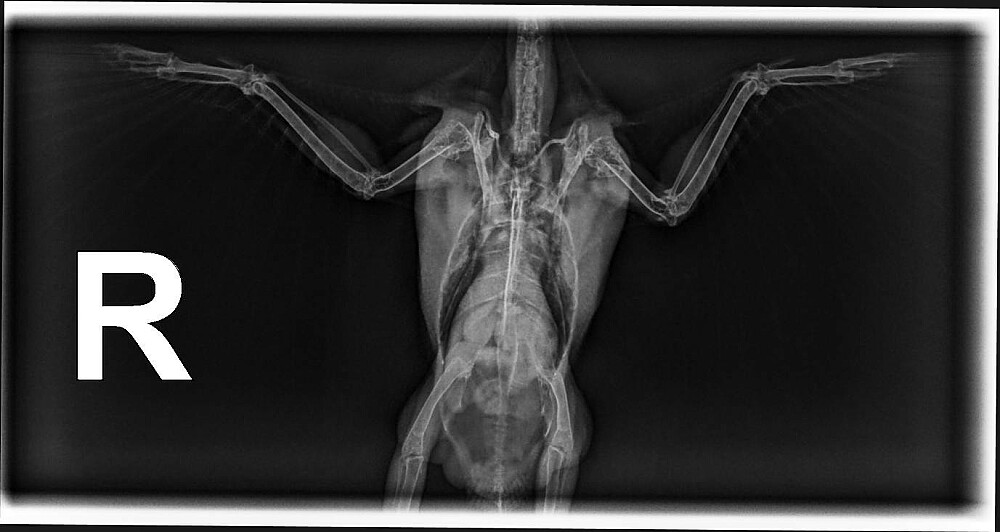
Once a patient arrives, our team creates a medical file and performs both a visual assessment and a comprehensive physical examination. This allows us to quickly evaluate the bird’s condition and determine the urgency of care.
Depending on how stable the patient is, radiographs (x-rays) may be taken immediately or delayed briefly to allow time for stabilization. These diagnostics are essential, as window strikes often result in injuries that are not visible externally, most commonly fractures of the clavicles (similar to collarbones in humans), as well as internal trauma and ocular damage. If injuries are identified, treatment begins right away. Patients are typically started on anti-inflammatory pain medication and supportive fluid therapy, followed by strict cage rest to allow for healing.
Throughout rehabilitation, our Wildlife Technicians maintain detailed medical records and schedule regular rechecks, including repeat examinations and x-rays to monitor progress. After approximately three weeks, follow-up radiographs are performed. If healing is progressing well, the patient is gradually moved into a larger enclosure to allow for increased movement. The next stage of recovery takes place at our Parkland County rehabilitation facility, where patients spend additional time in larger spaces rebuilding strength, improving flight ability, and practicing natural behaviors essential for survival. At around 6–8 weeks, a final release assessment is conducted. If the bird meets all criteria, it is released back into the area where it was found or into another suitable habitat.
So, how can you prevent this?
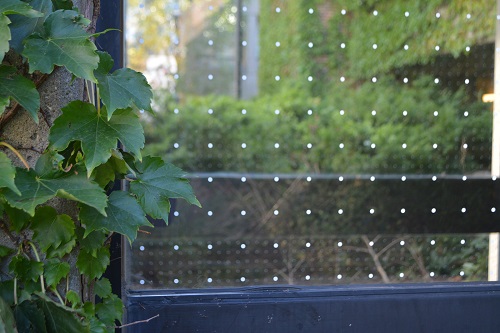
Photo from https://birdsafe.ca/design-standards/ captured by Lisa Horn
While many birds can recover with proper care, prevention is always the best outcome. Birds do not recognize glass as a solid object. Instead, they see reflections of trees, sky, or open space, and attempt to fly through them. This is what leads to collisions.
The most effective ways to prevent window strikes is to break up these reflections. The recommended method is applying a 2-inch by 2-inch grid pattern to the outside of your windows. This can be done using window decals or sticker, window-safe paint, temporary solutions like chalk
Even small changes can make a meaningful difference, especially during migration season.
Every bird that makes it to our care has a chance at recovery, but the greatest impact comes from preventing these injuries in the first place. That starts with you! Education, awareness and action can save countless lives.
If you’d like to learn more about preventing window strikes, visit: