
September 10, 2026 | Blog
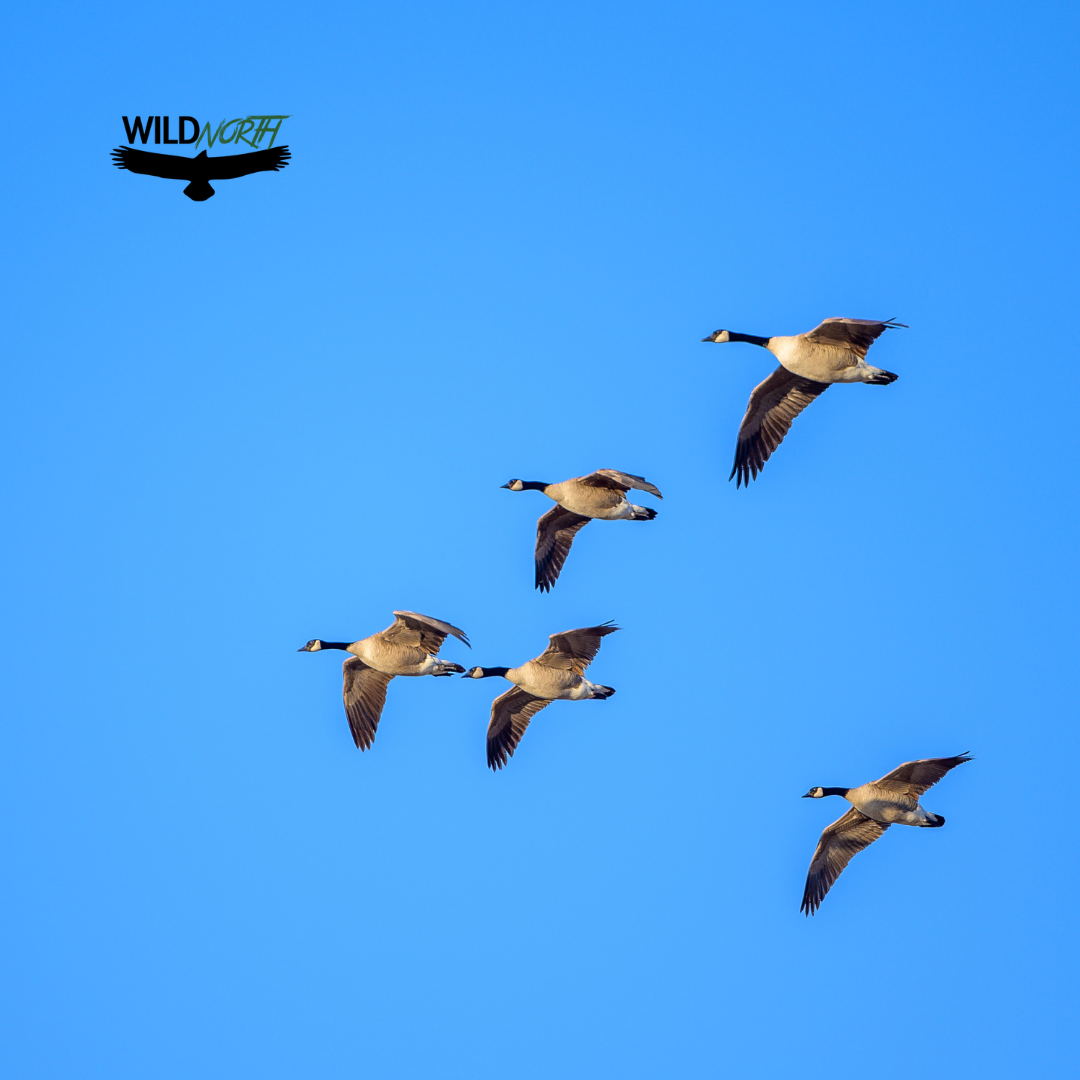
As of 2025, 437 bird species have been recorded in Alberta, but only 34 are non-migratory (Official List of the Birds of Alberta: Taxonomy | Royal Alberta Museum 2021 June 4). That means 92% of Alberta’s birds pack up and leave each fall, traveling thousands of kilometers to survive the winter. But when do they leave, and where do they go?
In our last blog, we explored ways to support wildlife during their transition to winter. Now, let’s dive into the fascinating world of migration: why birds leave, when they leave, and where they go.
The Science Behind Migration: Timing is Everything
Birds prepare for migration through a process called hyperphagia, a fancy term for eating a lot. They consume extra food to build fat reserves, which fuel their long journeys. But timing is critical:
Too early? They might arrive at their destination before food sources are available.
Too late? They could face harsh winter conditions.
Birds rely on cues like daylight, temperature, and food availability to trigger their migration. As days grow shorter, their behavior changes: flocks gather, feeding patterns shift, and energy levels spike in preparation for the journey.
Mapping the Journey: What is a Flyway?
Migration isn’t just a straight path, it’s a complex network of routes called flyways. According to The Flyway Concept Report:
“A flyway is the entire range of a migratory bird species (or groups of related species or distinct populations of a single species) through which it moves on an annual basis from the breeding grounds to non-breeding areas, including intermediate resting and feeding places as well as the area within which the birds migrate.” (Boere et al. 2006)
Flyways operate at three scales:
- Species-specific: The annual migration path of a single species, including breeding and non-breeding areas.
- Multi-species: Broad overlapping routes shared by many species, each with unique habitat preferences and migration strategies. For example: East Atlantic Flyway, the Mediterranean/Black Sea Flyway, or the West Asia/Africa flyway.
- Global regions: Large-scale regions of species with similar migration systems that are often used for international conservation efforts (Boere et al. 2006).
Alberta’s Frequent Flyers: When and Where They Go
September marks the start of fall in Alberta. Let’s take a closer look at six of our most common patients at WILDNorth and their incredible journeys.
Mallard
Total patients (as of September 2026): 1,574
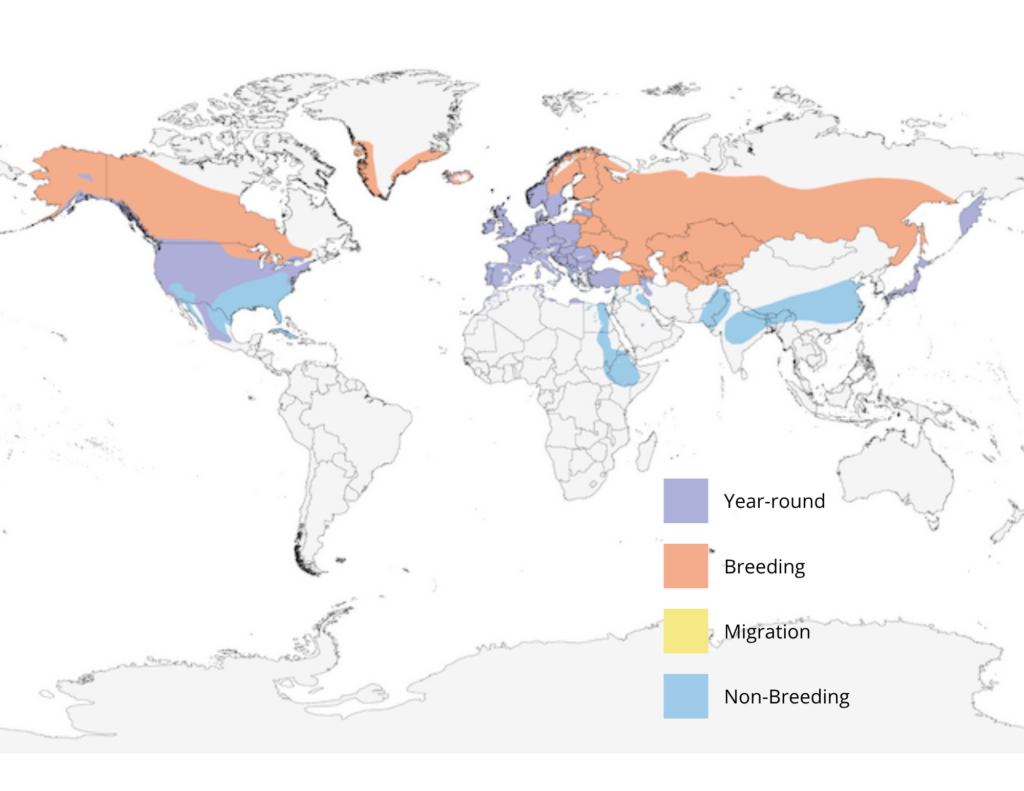
Figure 1: Distribution of the Mallard (Drilling et al. 2020 Mar 4)
Mallards take their time migrating, with no sudden spikes in movement. They begin leaving Alberta in early November, with most departing by late December. Interestingly, some Mallards start arriving in places like Lake Erie, Ohio, as early as late August (Drilling et al. 2020 Mar 4).
Canada Goose
Total patients (as of September 2026): 1,312
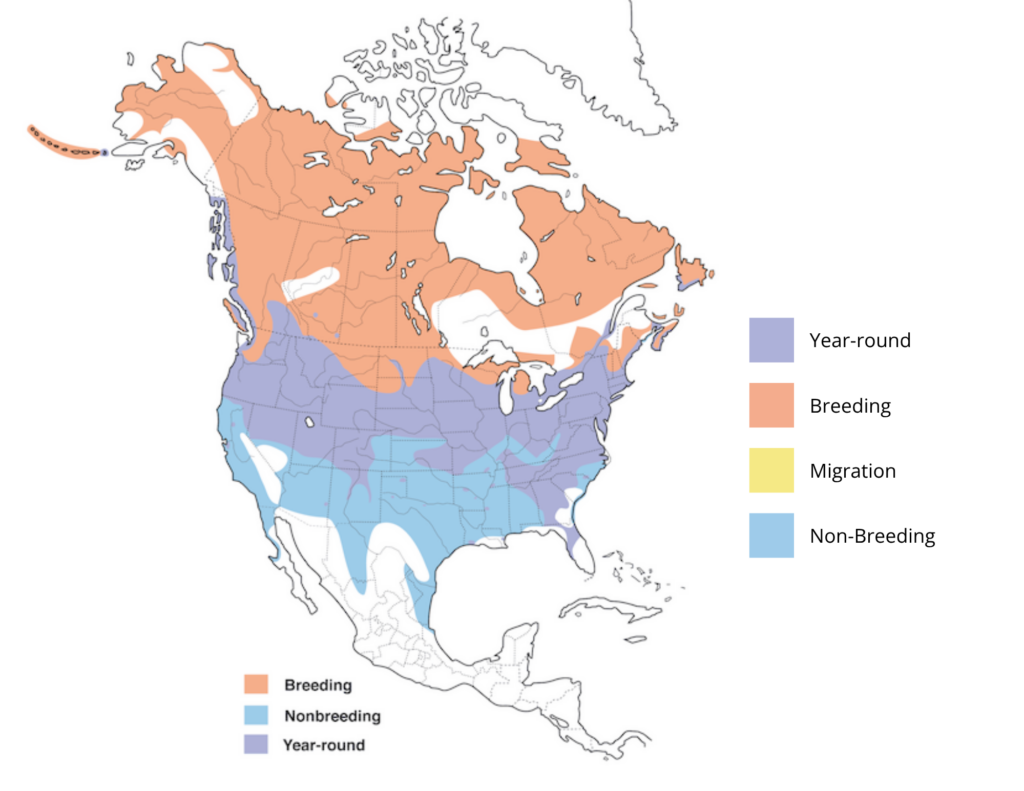
Figure 2: Distribution of the Canada Goose (Mowbray et al. 2020 Mar 4)
The Canada goose populations mostly pass through Alberta to their most northernly nesting areas and movement south begins in late august. They start leaving Alberta in late September leaving completely around mid-December. Most geese reach the U.S. by September to early October (Mowbray et al. 2020 Mar 4).
American Crow
Total patients (as of September 2026): 834
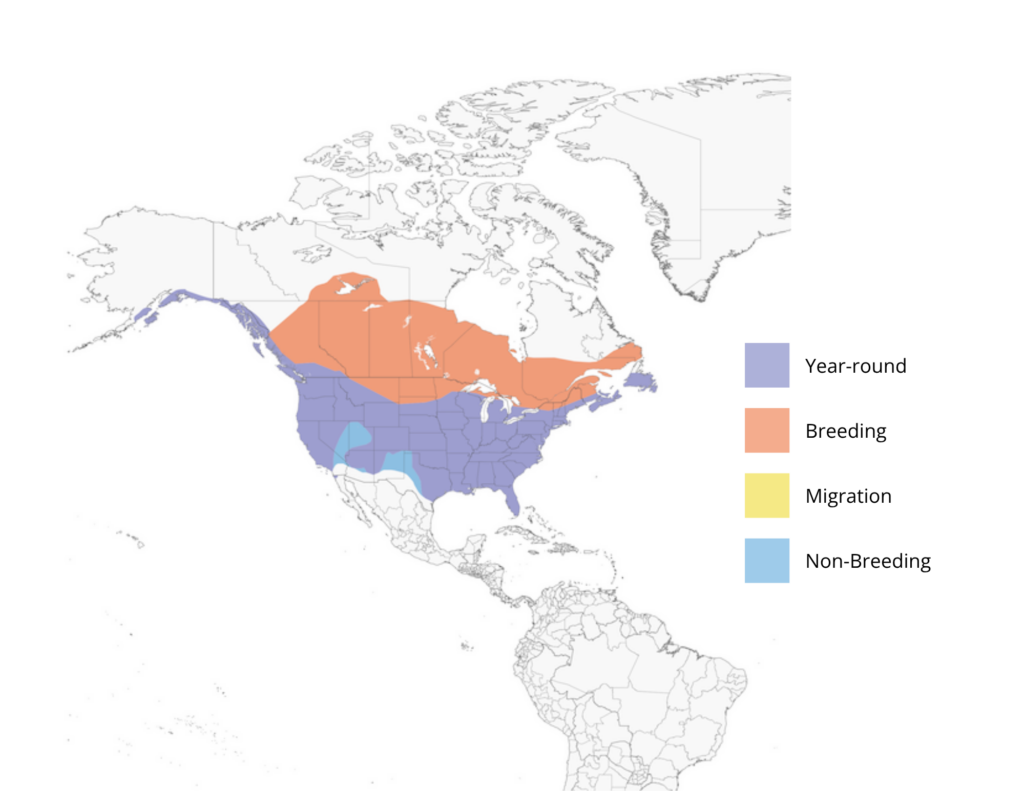
Figure 3: Distribution of the American Crow (Caffrey et al. 2026 Aug 28)
American Crows leave Alberta around in September or possibly August. Most American Crows waited until October and November to move back south. They are diurnal migrants, meaning they migrate mostly in the day. Crows that bread Canadian provinces and territories (including Alberta) and northern states tend to funnel south through Nebraska, Kansas, Oklahoma, and Texas (Caffrey et al. 2026 Aug 28).
American Robin
Total patients (as of September 2026): 645
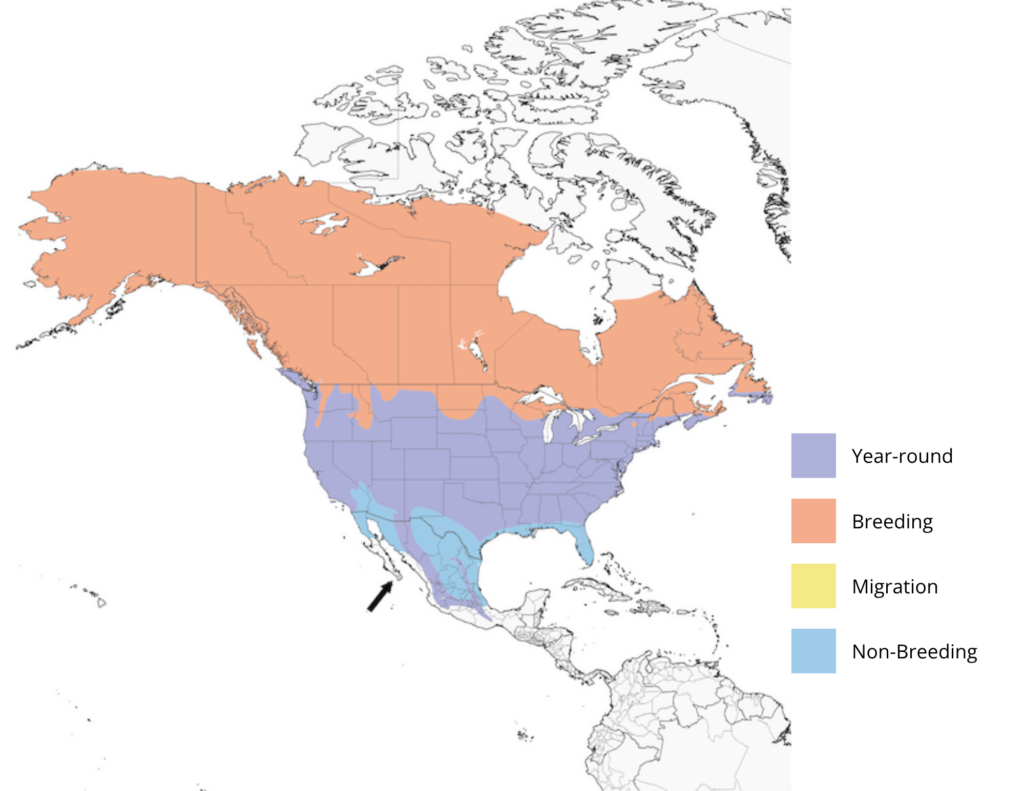
Figure 4: Distribution of the American Robin (Vanderhoff et al. 2020)
These birds have complicated migrations as the most broadly distributed thrush in North America. They start leaving Alberta in late August, leaving in greater numbers around September to the end of November. Some birds who were in Alberta can go as south as southern Mexico and Guatemala, while others choose to overwinter in Alberta or the rest of Canada (Vanderhoff et al. 2020).
Common Goldeneye
Total patients (as of September 2026): 274
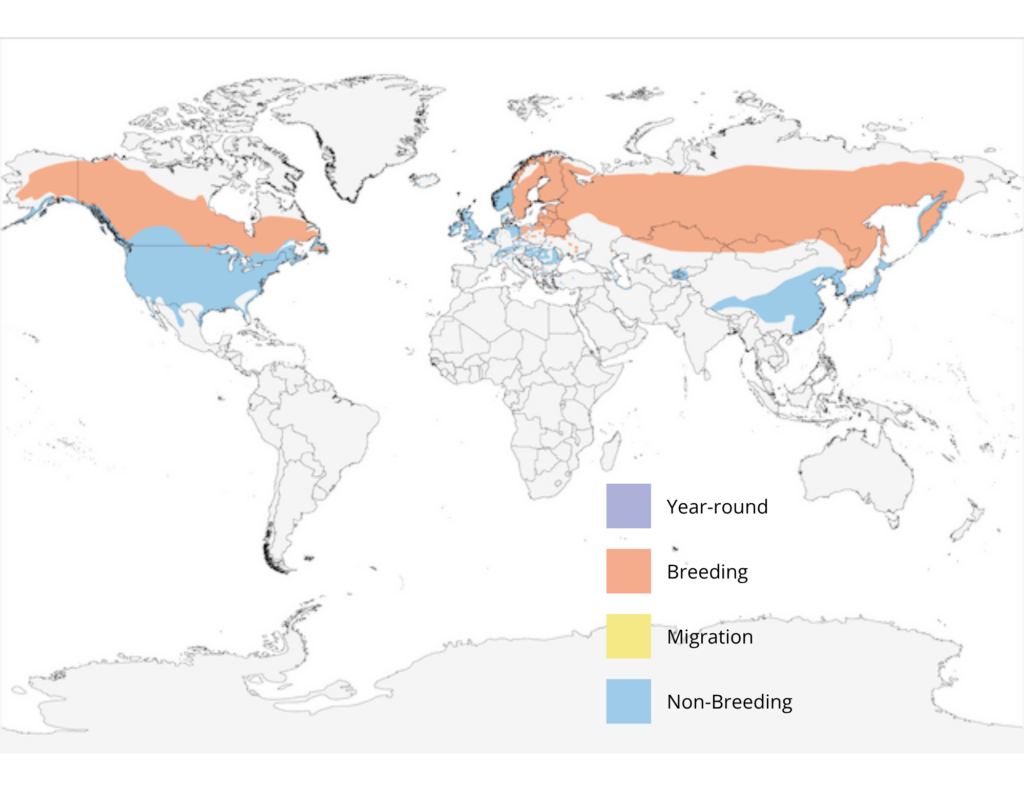
Figure 4: Distribution of the Common Goldeneye (Eadie et al. 2020 Mar 4)
Goldeneye’s tend to be one of the last waterfowl to migrate and winter as north as water permits. Goldeneye’s that were banded in Alberta wintered in the interior of British Columbia, Washington, Oregon, California, Idaho, and w. Montana, Wyoming, Nebraska, and Colorado, and across the Great Lakes and to the Atlantic coast. Migration timing is different for these birds because while juveniles can appear in wintering grounds in October, most Goldeneyes migrate just before the water freezes. This could mean mid-October to the first week of November and arriving as late as December (Eadie et al. 2020 Mar 4).
Lesser Scaup
Total patients (as of September 2026): 244
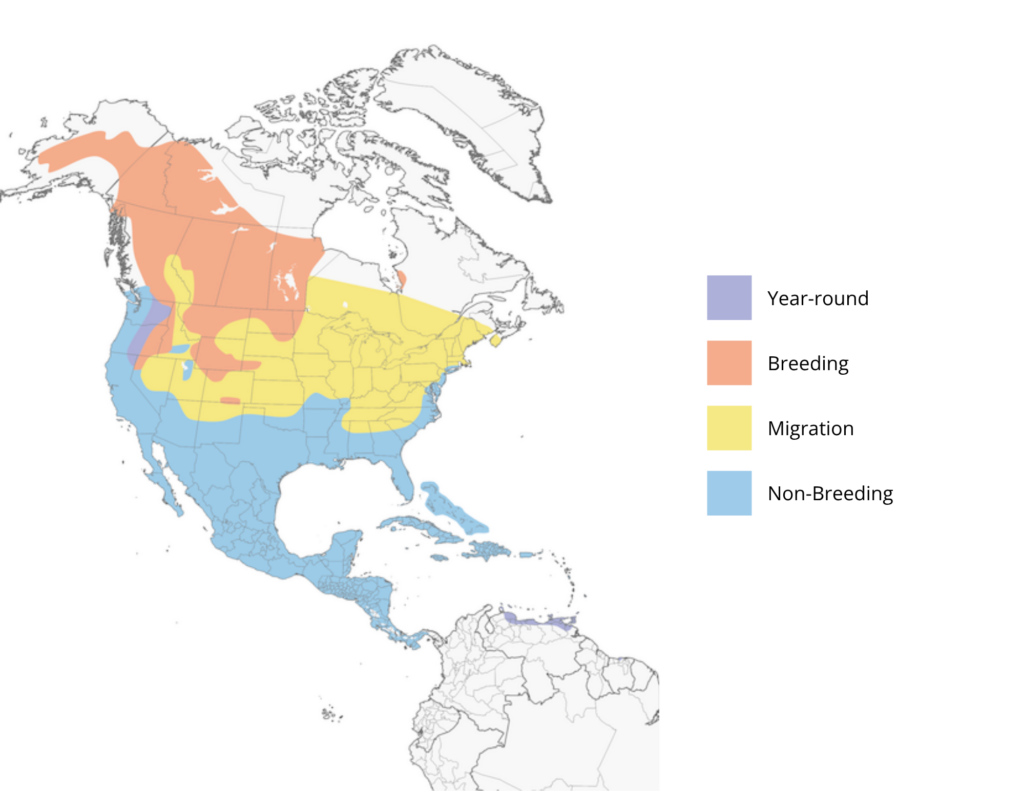
Figure 4: Distribution of the Lesser Scaup (Anteau et al. 2020 Mar 3)
Lesser Scaup are more unique as they don’t follow the general flyaway concept developed for waterfowl. Instead, they migrate along the boreal forest edge through the Prairie Pothole Region and south along the Mississippi River to the Gulf Coast. A large majority of the Scaup population winters in states bordering the Gulf of Mexico. The peak movements out of Canada are from mid-October to late November (Anteau et al. 2020 Mar 3).
Fun fact! Arctic terns have the longest migration. The total travel distance of the non-breeding period is ~90,000 ± 2000km (Hatch et al. 2020 Mar 4).
More complicated than it seems
Migration is more than a simple shift south. Some move in predictable fashions while others go in unexpected directions. What triggers a bird to fly south, if they flock, how often they take breaks, and when all depend on the species itself. Even with generalizations like the flyaway concept for waterfowl, you can always have exceptions like the Lesser Scaup.
Citations
Anteau MJ, Jean-Michel DeVink, Koons DN, Austin JE, Custer CM, Afton A D. 2020 Mar 3. Lesser Scaup (Aythya affinis). Birds of the World. doi:10.2173/bow.lessca.01. [accessed 2026 Sept 8]. https://birdsoftheworld.org/bow/species/lessca/cur/introduction.
Boere GC, Galbraith CA, Stroud DA. 2006. Waterbirds Around the World. The Stationery Office. [accessed 2026 Sept 8]. https://www.researchgate.net/publication/268036693_The_Flyway_Concept_What_it_Is_and_What_it_Isn’t
Caffrey C, Verbeek NA, Clark AB, McGowan KJ, Pyle P. 2026 Aug 28. American Crow (Corvus brachyrhynchos). Poole AF, Gill FB, Smith MG, editors. Birds of the World. doi:10.2173/bow.amecro.01.6. [accessed 2026 Sept 8]. https://birdsoftheworld-org.proxy.birdsoftheworld.org/bow/species/amecro/cur/introduction
Drilling N, Titman RD, McKinney F. 2020 Mar 4. Mallard (Anas platyrhynchos). Billerman SM, editor. Birds of the World. doi:10.2173/bow.mallar3.01. [accessed 2026 Sept 8]. https://birdsoftheworld.org/bow/species/mallar3/cur/appearance#meas.
Eadie JM, Mallory ML, Lumsden HG. 2020 Mar 4. Common Goldeneye (Bucephala clangula). Billerman SM, editor. Birds of the World. doi:10.2173/bow.comgol.01. [accessed 2026 Sept 8]. https://birdsoftheworld.org/bow/species/comgol/cur/introduction.
Hatch JJ, Gochfeld M, Burger J, Garcia E. 2020 Mar 4. Arctic Tern (Sterna paradisaea). Birds of the World. doi:10.2173/bow.arcter.01. [accessed 2026 Sept 9]. https://birdsoftheworld.org/bow/species/arcter/cur/distribution.
holly_lillie. 2016 Apr 26. Are robins back, or did they ever leave? Alberta Institute For Wildlife Conservation. [accessed 2026 Sept 10]. https://www.aiwc.ca/blog/are-robins-back-or-did-they-ever-leave/.
Mowbray TB, Ely CR, Sedinger JS, Trost RE. 2020 Mar 4. Canada Goose (Branta canadensis). Birds of the World. doi:10.2173/bow.cangoo.01. [accessed 2026 Sept 8]. https://birdsoftheworld-org.proxy.birdsoftheworld.org/bow/species/cangoo/cur/introduction
Official List of the Birds of Alberta: Taxonomy | Royal Alberta Museum. 2021 June 4. Royal Alberta Museum. [accessed 2026 Sept 5]. https://royalalbertamuseum.ca/collections/life-sciences/ornithology/birds-list/taxonomy.
Thorne E. 2026 Aug. Migratory Bird Timing by Season Explained – Watch and Gather. Watch and Gather. [accessed 2026 Sept 10]. https://watchandgather.com/migratory-bird-timing-by-season/.
Vanderhoff N, Pyle P, Patten MA, Sallabanks R, James FC. 2020. American Robin (Turdus migratorius), version 1.0. Birds of the World. doi:10.2173/bow.amerob.01. [accessed 2026 Sept 10]. https://birdsoftheworld.org/bow/species/amerob/cur/introduction.