
July 30, 2026 | Blog
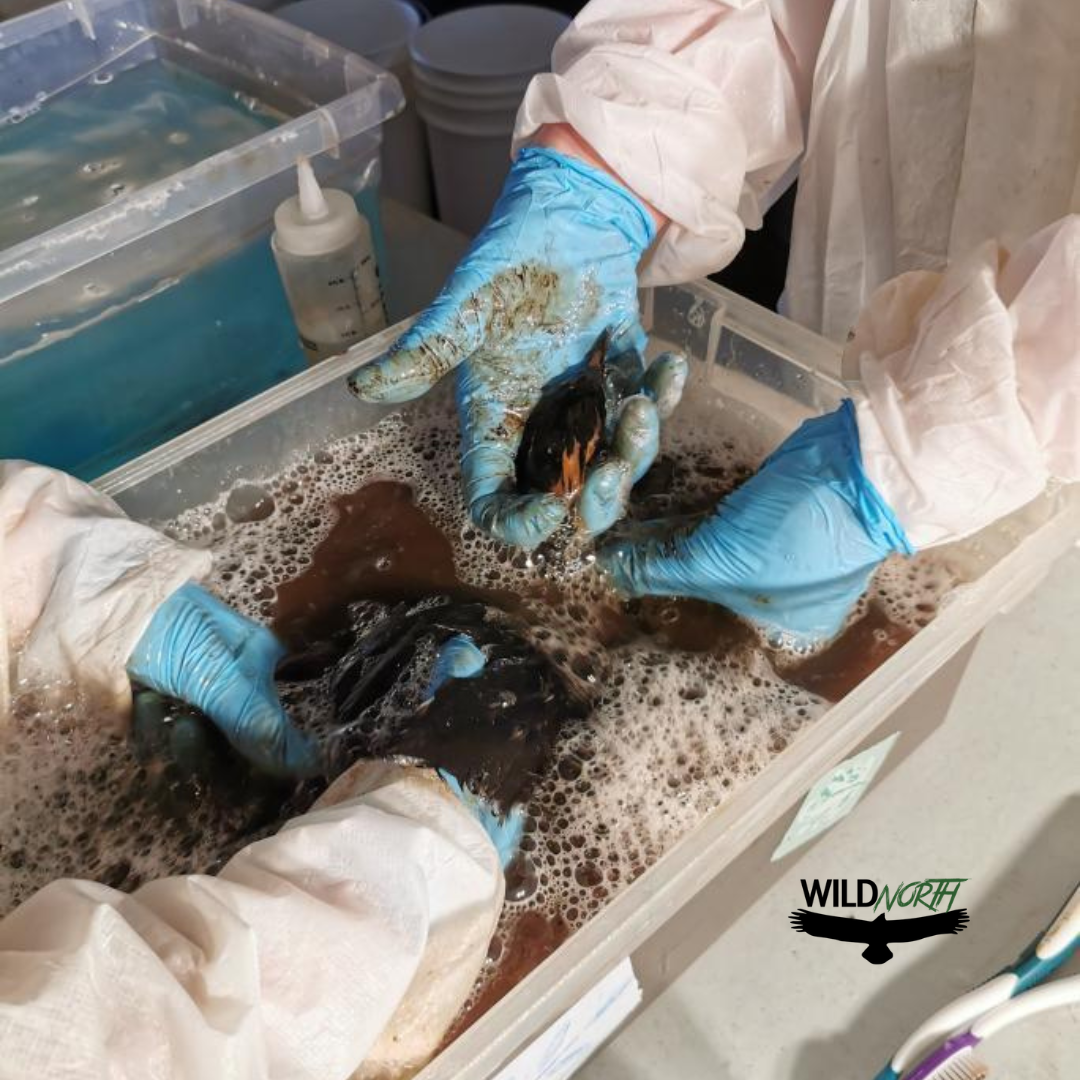
Every time someone tosses a plastic bottle into the wrong bin, pours motor oil down a storm drain, or sets a glue trap without thinking, they’re not just polluting the environment; they’re putting wildlife in grave danger. At WILDNorth’s Wildlife Rehabilitation Facility, we see the consequences firsthand. Animals arrive sick, injured, or trapped because of human-made contaminants. But what exactly are these contaminants, and how do they affect the creatures we’re trying to help?
What Are Contaminants and Why Do They Matter?
In the world of wildlife rehabilitation, contaminants are any harmful substances that threaten the health and well-being of animals to entire ecosystems. These aren’t just random chemicals; they’re persistent threats that can disrupt lives. The usual suspects are plastics, industrial runoff, agricultural herbicide and pesticide sprays, heavy metals, and improper waste disposal.
The effects of contamination are far-reaching. They can (ECCC 2020):
- Disrupt reproduction (e.g., endocrine disruptors mimicking hormones).
- Weaken immune systems, making animals more susceptible to diseases.
- Alter behavior, leaving prey vulnerable to predators.
- Cause birth defects and cancers
- Poison entire food webs by accumulating in soil and sediment, where tiny organisms absorb toxins and pass them up the food chain (ECCC 2020) (ECCC 2020).
- Much more.
The Three Faces of Contamination
Contaminants aren’t all the same. Here we’ve grouped them into three broad categories:
Endocrine Disruptors
These sneaky chemicals mimic hormones, tricking the body into thinking it’s receiving natural signals. The result? Messed-up growth, reproduction issues, and behavioral changes. Think of them as imposters in the body’s physiological and metabolic processes (ECCC 2020).
Persistent Organic Pollutants (POPs)
These chemicals don’t break down easily and stick around in the environment for years because they resist chemical, biological, and photolytic degradation. POPs bioaccumulate, meaning they build up in the bodies of living organisms, causing long-term damage like cancer and birth defects (ECCC 2020).
Emerging Compounds
These are the new kids on the block that have been recently identified or still undergoing research. Unfortunately, they have increased more than predicted, and there is a growing concern for the public, environment, and research (ECCC 2020).
What Contaminants Does WILDNorth Encounter?
At our facility, we see a mix of industrial and household contaminants. Here’s what we deal with most often:
- Bitumen (oil sands byproducts): A sticky, toxic mess that clings to feathers and fur, suffocating animals and poisoning their systems.
- Motor oil: Often dumped or leaked, it coats animals, impairing their ability to regulate body temperature and stay buoyant.
- Cooking grease: A less obvious but still dangerous contaminant, especially for animals that scavenge trash.
- Glue trap glue: The stubborn substance causes a slow, agonizing death for small wild mammals and birds.
On rarer occasions we encounter animals contaminated by other things like sewage. Each contaminant requires a unique decontamination approach as one size doesn’t fit all.
Decontamination: A Delicate, High-Stakes Process
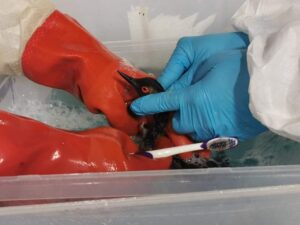
Cleaning a contaminated animal isn’t like giving your dog a bath. It’s a carefully orchestrated medical procedure that requires expertise, patience, and technique. Here’s how we do it:
Step 1: Identify the Culprit
Before we can treat an animal, we need to know what they’re contaminated with. If we know the brand or chemical, we check the Safety Data Sheet (SDS) for safe handling instructions and specific personal protective equipment we need. We put on other safety equipment that we think is appropriate for the contaminant at hand.
Step 2: Stabilize the Patient
Contaminants don’t just make animals dirty; they make them sick. A bird covered in oil might be hypothermic, dehydrated, or suffering from chemical burns. So, our first step is to stabilize and support them with fluids, nutritional support, heat support, and prior to the wash itself we provide safe sedation to keep them calm. The washing process is extremely stressful on the animal, and this preparation aids the process and maximizes recovery.
Step 3: The Wash
This is where things get tricky. Different contaminants require different approaches as thick oils may need a thinner oil pretreatment to help break up the gunk. We use water that matches the animal’s body temperature to avoid shock. Then begins the rotation of soapy water and rinse water to fully remove the contaminate. For birds, our staff uses a specific feather safe washing method to avoid causing harm. Some staff have also been trained by the International Bird Rescue who are experts in the field. WILDNorth does use Dawn Dish Soap like many other wildlife rehabilitators as studies and have shown it is quite effective yet safe for wildlife.
Step 4: Rinse and Dry
After the wash, we rinse the animal thoroughly using a gentle yet effective hose nozzle. It is important to remove all the soap from the animal as soap can also be a contaminant and mess with an animal’s ability to be water or weather proof. Then comes the drying process. The animal is then placed in an enclosure with a pet dryer (essentially a large blow dryer) to gently dry, away from more human interaction. And finally, a quiet and warm space to let them recover.
Step 5: Waste Disposal
But the work is not done yet, the water we used to clean these animals is contaminated too. We can’t just dump it down the drain; we pay a private waste collector to ensure it doesn’t harm Edmonton’s water treatment system.
Every Case Is Unique
Decontamination isn’t a one-size-fits-all process. The contaminants and health of the animal heavily dictate the best approach to maximize recovery.
Contamination isn’t just a problem for wildlife rehabilitators; it’s a global crisis. Every year, millions of animals die from pollution. But there’s hope. By reducing waste, properly disposing of hazardous materials, and advocating for stronger environmental protections, we can all make a difference.
What Can You Do to Help?
If you come across a wild animal that is contaminated, please do not attempt to wash them yourselves, and call your nearest licensed wildlife rehabilitator for advice.
You don’t need to be a scientist or a wildlife expert to help. Here are a few simple ways to reduce contamination risks for animals:
Dispose of waste properly: Never pour motor oil, cooking grease, or chemicals down drains or onto the ground.
Avoid glue traps: Use humane alternatives for pest control.
Pick up litter: Even small items like plastic wrappers or gum can harm wildlife.
Support policies that protect the environment: Advocate for stronger regulations on industrial waste and agricultural chemicals.
Educate others: Share knowledge about contaminants and their impact on wildlife.
Sources
Environment and Climate Change Canada (ECCC). 2020 Nov 7. Contaminants and Wildlife. Wildlife and landscape science research topics: contaminants and wildlife. [accessed 2026 July 29]. https://www.canada.ca/en/environment-climate-change/services/wildlife-research-landscape-science/research-topics/contaminants.html.
Environment and Climate Change Canada (ECCC). 2020 Nov 7. Sediment Toxicology. Wildlife and landscape science research topics: sediment toxicology. [accessed 2026 July 29]. https://www.canada.ca/en/environment-climate-change/services/wildlife-research-landscape-science/research-topics/sediment-toxicology.html.
Environment and Climate Change Canada (ECCC). 2020 Nov 7. Soil Toxicology. Wildlife and landscape science research topics: soil toxicology. [accessed 2026 July 29]. https://www.canada.ca/en/environment-climate-change/services/wildlife-research-landscape-science/research-topics/soil-toxicology.html.