July 02, 2026 | Blog
Pigeons are truly everywhere, on city streets, in parks, and even outside our windows. At WILDNorth, we care for injured or in-need wildlife, but there’s a catch: we can’t take in domesticated pigeons. How do we know which is which? This is where things get interesting.
A Quick History of Pigeons in North America
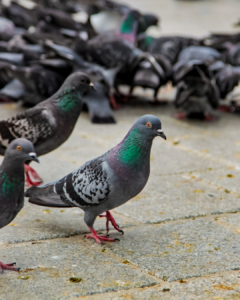
Pigeons are not native to North America. They were introduced in the early 1600s and have since spread across the continent. The Rock Dove (Columba livia) is the wild ancestor of the modern-day pigeon. This means that, technically, all pigeons in North America that aren’t in someone’s care are feral rather than wild.
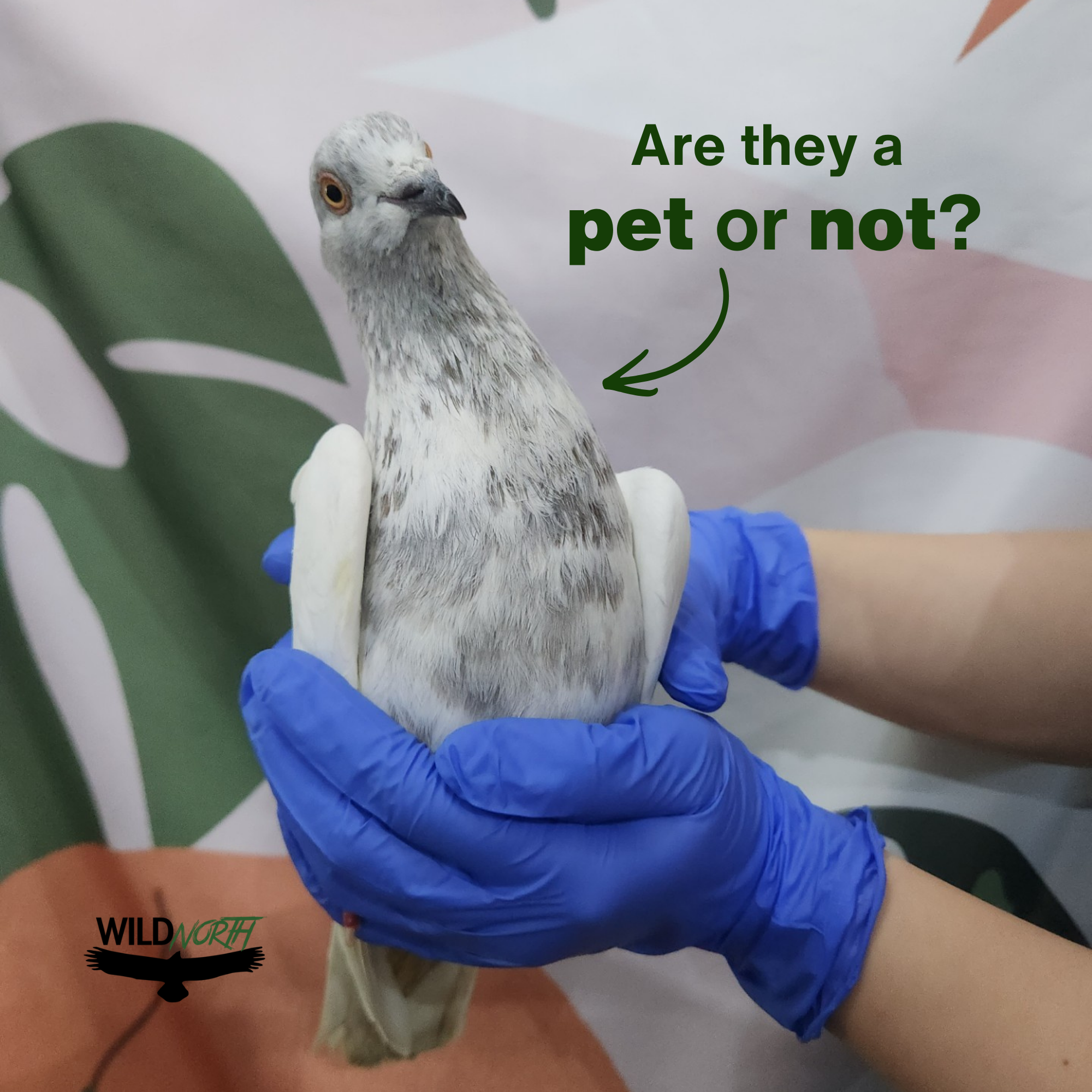
At WILDNorth, we can still take in any pigeon that isn’t owned by someone. But here’s the challenge: how do we tell if a pigeon is a lost pet or a truly feral bird?
The Challenge of Identifying Domestic Pigeons
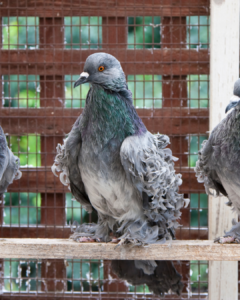
Most feral pigeons look similar with their gray with iridescent neck feathers, but domestic pigeons (also called fancy pigeons) come in hundreds of varieties. These breeds vary widely in size, shape, color, and even behavior. Some fancy pigeons escape and breed with wild pigeons, creating wild hybrids that can look like fancy birds. This makes it hard to rely on visuals alone to determine if a pigeon is a lost pet or not.
What Happens When We Suspect a Pigeon is a Lost Pet?
Once we begin our physical exam, we may start to suspect a pigeon might be a lost pet. We then launch an investigation to reunite it with its owner. Here’s how we do it:
Step 1: Check with Organizations
We start by checking if the pigeon has a leg band. This could be a scientific research band or an owner’s band.
If it’s an owner’s band, the serial number can help us identify the bird. We input this number into the Canadian Racing Pigeon Union’s Lost Bird Wizard, which immediately alerts members about missing birds.

Step 2: Spread the Word
We post about the bird in local birding groups and on social media platforms like the Edmonton Area Lost Bird group. These communities are dedicated to reuniting owners with their lost pets.
Step 3: Reunite or Rehome
If the owner is found, we arrange for them to collect their pet. Reuniting a lost bird with its owner is always a heartwarming moment for our team.
If no owner is found, we must surrender the bird to another organization that can care for it long-term and rehome them. We can’t keep the bird indefinitely, nor can we release it into the wild. At WILDNorth, we ensure the bird goes to a place like Meika’s Birdhouse, a fantastic charity that rehomes birds in need.
Pigeons Are Always Welcome at WILDNorth
We see pigeons as patients year-round. Sometimes, they’re truly injured and need help. Other times, they’re lost pets that have approached humans for assistance. No matter the reason, we treat every pigeon with care and compassion.
Pigeons may seem like just another urban bird, but for us, they’re a reminder of the complex relationship between humans and wildlife. Whether they’re feral, lost, or injured, we’re here to help, one pigeon at a time.