
June 18, 2026 | Blog

A helping hand saves his life: A Hawk’s Journey to Recovery
This story begins with a rescuer in St. Albert.
On a chilly April day, our rescuer spotted a large bird of prey in their yard, a fascinating sight. The rescuer kept watch as time passed, growing increasingly concerned when the bird could only fly a few feet at a time. Finally, on April 13th, a call was made, and the bird was brought into our care at the Hospital.
The rescuers’ photos revealed a droop in the bird’s left wing. A physical exam uncovered concerning details. Small amounts of old blood around the glottis in his mouth, though it wasn’t actively bleeding. During range-of-motion tests, the left shoulder clicked noticeably. An X-ray confirmed a fractured left clavicle and coracoid bone in his chest.
To ease his pain, we administered Meloxicam, and to rehydrate him, Lactated Ringer Serum was given subcutaneously. Aside from the shoulder injury, the hawk was otherwise in good condition, though he wasn’t eating or standing on his own and required tweezer-feeding.
By April 14th, he was ready for transfer to the Wildlife Rehabilitation Center. By the end of the day, he could stand on his own. The next day, he was perching, and soon after, he began self-feeding. His rapid improvement was promising, but his recovery still had a long way to go.
As days passed, the hawk regained strength and weight under cage rest, allowing his bones to heal. Then, in early May, he was moved to a larger space for flight testing and pre-release conditioning.
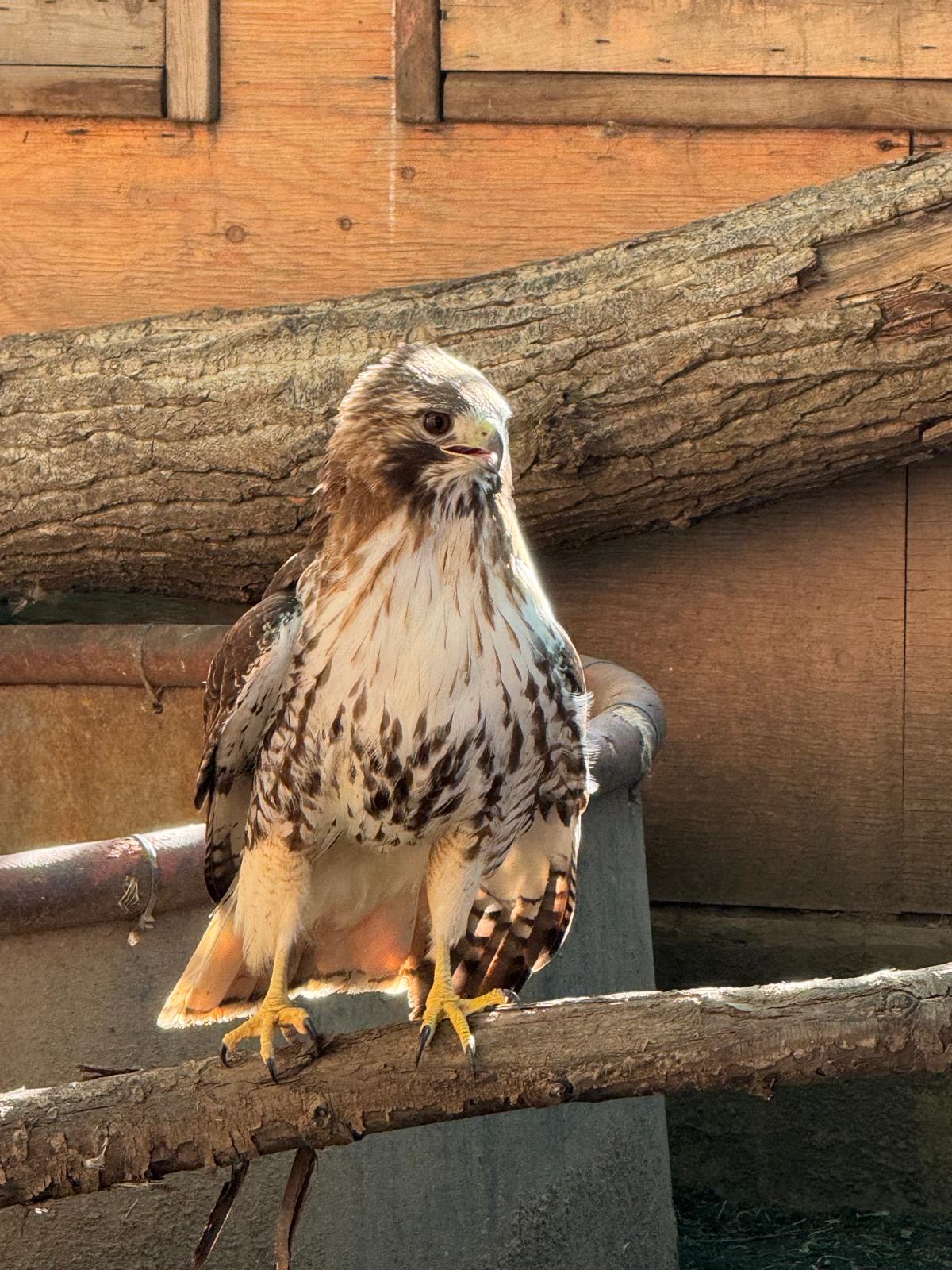
On May 2nd, we were thrilled to see him exhibit strong lift during flight. Though he struggled slightly, common for birds after prolonged cage rest, his earlier wing droop was nowhere to be seen, even after flying. This was a significant sign of progress.
But this hopeful time took an unexpected downturn.
As he flew more frequently, he struggled to land consistently, often hitting the wall and falling. The wing droop returned, and his condition worsened. He had more difficulty gaining lift, became uncoordinated, and continued to droop his left wing. Stress levels rose, his eating became inconsistent, and he lost weight.
On May 7th, a second X-ray and physical exam were conducted to assess his progress. While his left wing’s range of motion was good and showed no signs of clavicle or coracoid instability, the X-ray revealed the bones were healing, but not as aligned as hoped. We adjusted his treatment plan to include weekly red light therapy, pain medication, and additional rest.
It was time for him to return to the Rehabilitation Center to follow the doctors’ orders. Days later, he showed significant improvement and was allowed minimal flight exercises to rebuild his coordination. His flights grew stronger, his meals larger, and his endurance increased. By May 21st, there was no wing droop, and by May 26th, he was ready for release.
Finally, on June 7th, we watched as he took flight near Horseshoe Lake, soaring freely. A wave of satisfaction washed over our staff and volunteers, knowing this remarkable bird, after a challenging journey, was free to live life to his fullest.
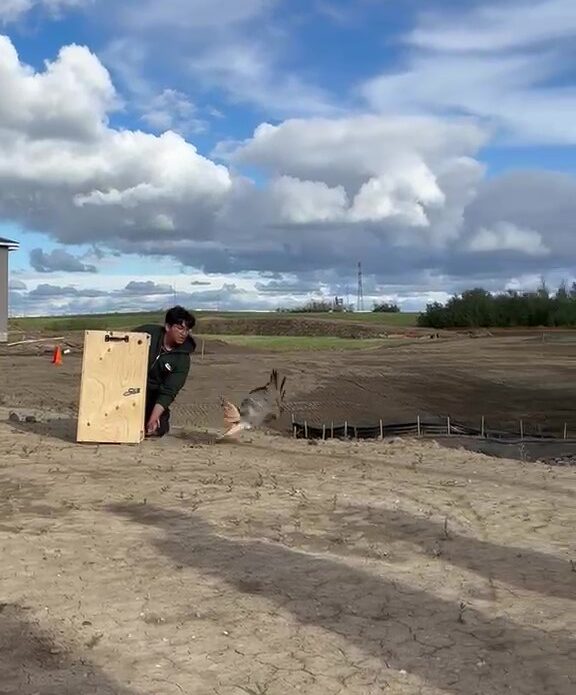
Thank you for reading about this resilient bird of prey and the dedication of our staff and volunteers. None of this would be possible without them.