
June 04, 2026 | Uncategorized
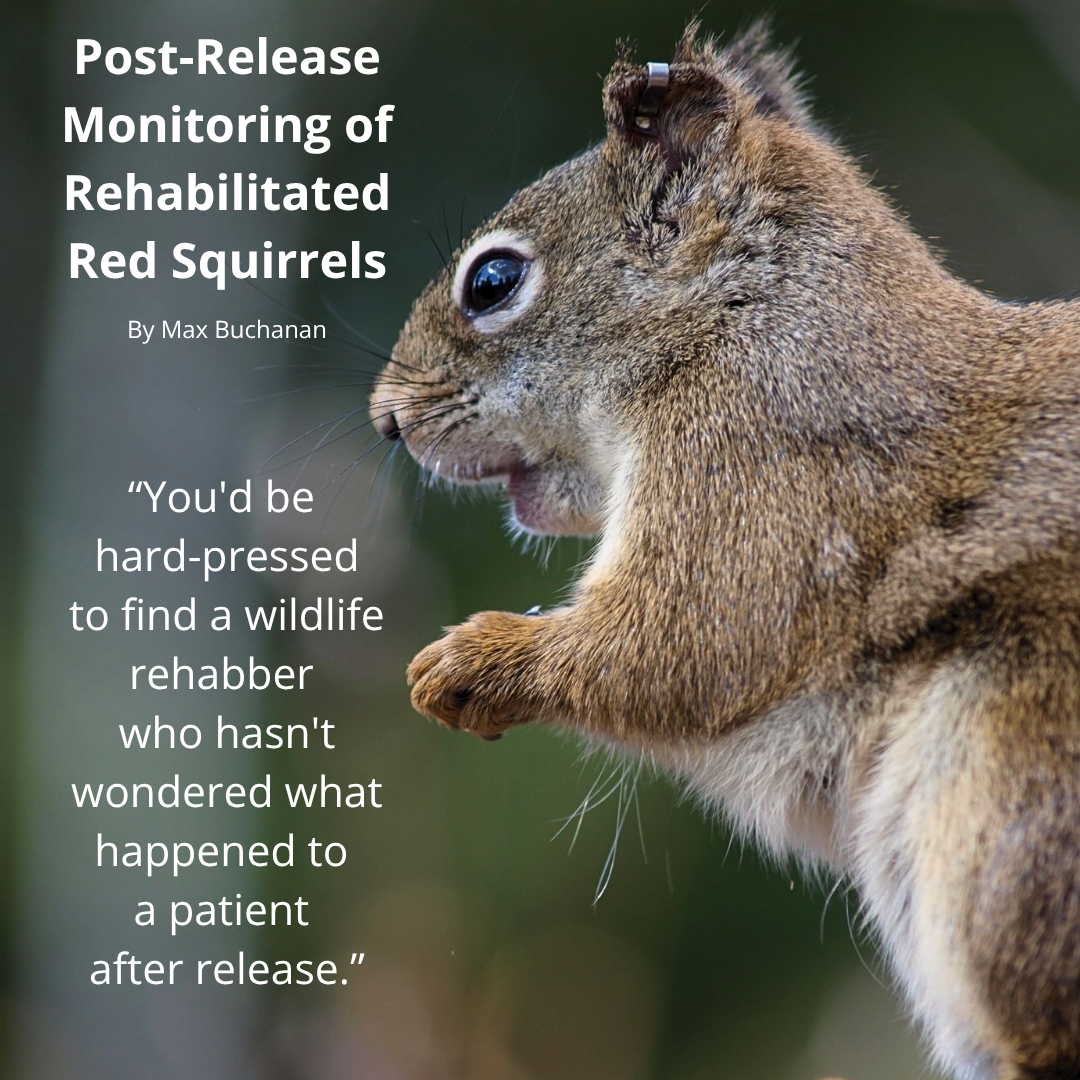
Gone but not Forgotten: Post-Release Monitoring of Rehabilitated Red Squirrels
Written by Max Buchanan, WILDCare Manager Parkland County Rehabilitation location
You’d be hard-pressed to find a wildlife rehabber who hasn’t wondered what happened to a patient after release. Unlike domestic animal care, we do not get the opportunity to schedule a follow-up exam. Instead, we trust that the time, care, and effort invested into each patient has helped provide the skills and strength needed to thrive back in the wild. What does it mean to “thrive” in the wild world, though? Life for wild animals is competitive and difficult, and the difference between being at 99% and 100% can be impactful. Because of this reality, each patient at WILDNorth must meet strict, research-backed criteria prior to being released. We look at objective metrics, some of which include injury and disease resolution, appropriate body condition (e.g., healthy weight and muscle mass), and the presentation of behaviours natural to the particular species. Meeting these criteria gives an animal the best possible chance of surviving in the wild, but thriving encompasses more than survival alone. A truly successful outcome may also include an animal’s ability to navigate complex social interactions, establish territory, avoid future conflicts, find mates, and ultimately contribute to the next generation of its species. Unfortunately, we cannot realistically provide all of these exposures to our patients.
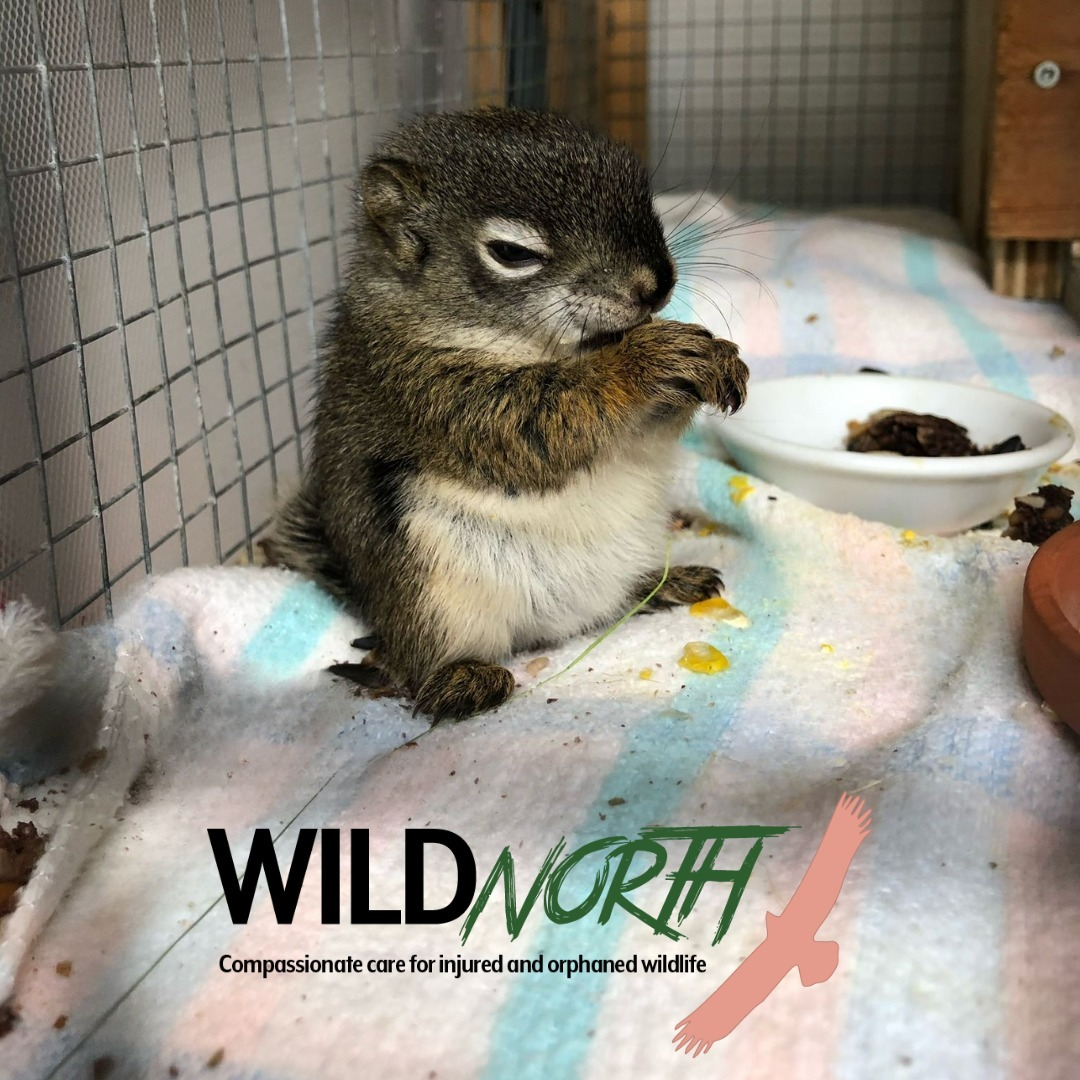
When patients come to us at later stages of life, we can assume they have already been immersed in these “wild” experiences. What remains largely unknown is the long-term effect rehabilitation may have on these more complex behaviours, physical condition, and survival skills in hand-raised newborns (patients brought to us as orphaned infants) compared to their wild-raised counterparts. If we want to shed some light on the lives of these former WILDNorth patients, the first step is post-release monitoring. To do this, we needed to select a species that regularly enters our care both as orphaned young and as independent adults, allowing us to compare outcomes across different rehabilitation experiences. The American red squirrel (Tamiascuris hudsonicus) was the perfect candidate and presented a viable research opportunity for me, in partnership with Dr. Shannon Digweed, PhD., at MacEwan University. As most Edmontonians know, Red Squirrels are ubiquitous in our urban ecosystem. Because of this, they’re one of the species most frequently admitted to WILDNorth. While we work hard to prepare every squirrel for life back in the wild, without projects like this, we do not know the success rate of those individuals once released. Success in our case study is measured first by survival, but also by the assimilation of our patients back into a natural life, following those complex behaviours we mentioned previously. By monitoring Red Squirrels after release, we aim to gain a deeper understanding of the impact wildlife rehabilitation has on this species. We kept track of study individuals using ear tagging and non-permanent marking.
At WILDNorth, we see over 80% of our red squirrel patients come in as pre-adults! In all cases where a pre-adult squirrel comes into care, our goal is to raise them from dependence to independence. Red Squirrels are altricial, meaning their young are helpless at birth, much like our own human babies. While rehabilitators can provide adequate nutrition and physical care, there are aspects of development that only wild parents and natural environments can fully provide. Because we can’t directly measure all of those influences, we look for those complex behaviours after release that indicate a squirrel is functioning normally in the wild! Behavioural traits are incredibly important for all wild species. For red squirrels, one of the most important is food management. Before winter arrives, squirrels spend months building food caches called middens, large piles of cone scales that serve as a “refrigerator” for the colder months ahead. If you’ve ever noticed a mound of shredded pine cones at the base of a spruce tree, you’ve likely found one! Food caching is only one piece of the puzzle. Red squirrels are also highly territorial and rely on vocalizations and other behaviours to defend resources and maintain social boundaries. These are skills that rehabilitators cannot directly teach, making them valuable indicators of how well a squirrel has adapted after release.
It is incredibly rewarding to find former patients displaying exactly these behaviours. We head into the forest to see them building middens, alarm calling, defending territories, and behaving like wild squirrels should. The research expeditions have been very rewarding and insightful. It warms my heart to see our former patients back out in the wild where they belong. While the success of wildlife rehabilitation cannot be measured by a single species or study, research like this helps us better understand what happens after release. By continuing to monitor wildlife in the wild, we can gain valuable insights that help improve rehabilitation practices and guide future research.